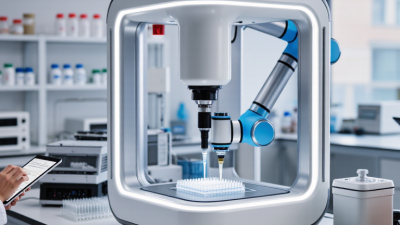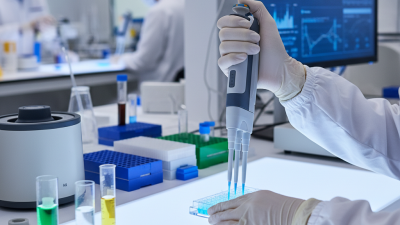
Choosing the best liquid handling system in 2026 is less about finding one winning robot and more about matching equipment to daily laboratory work. A system moving samples between 96-well plates may need different capabilities from one supporting 384-well screening. Pipetting accuracy matters, but so do deck space, tip consumption, contamination controls, software integration, and local service.
Grand View Research estimated the global laboratory automation market at USD 5.91 billion in 2023, with projected growth through 2030 (Laboratory Automation Market Size, Share & Trends Analysis Report, 2024). This figure covers a broader market, not liquid handling alone. Still, it signals sustained investment in automation. It does not prove that every lab needs a large platform. Not even close.
A useful comparison should examine published performance specifications and request application-specific validation data. Ask vendors to demonstrate the actual workflow, including plate transfers, liquid types, and error recovery. Watch the deck during a real run. Check how quickly staff can change protocols, clean the work area, and resolve a failed dispense. These practical details can outweigh an impressive brochure figure. Even this approach has a blind spot: vendor demonstrations may not reflect months of routine use. The strongest choice is therefore the system that meets documented requirements, fits existing instruments, and remains supportable as workloads change. There is no universal best.
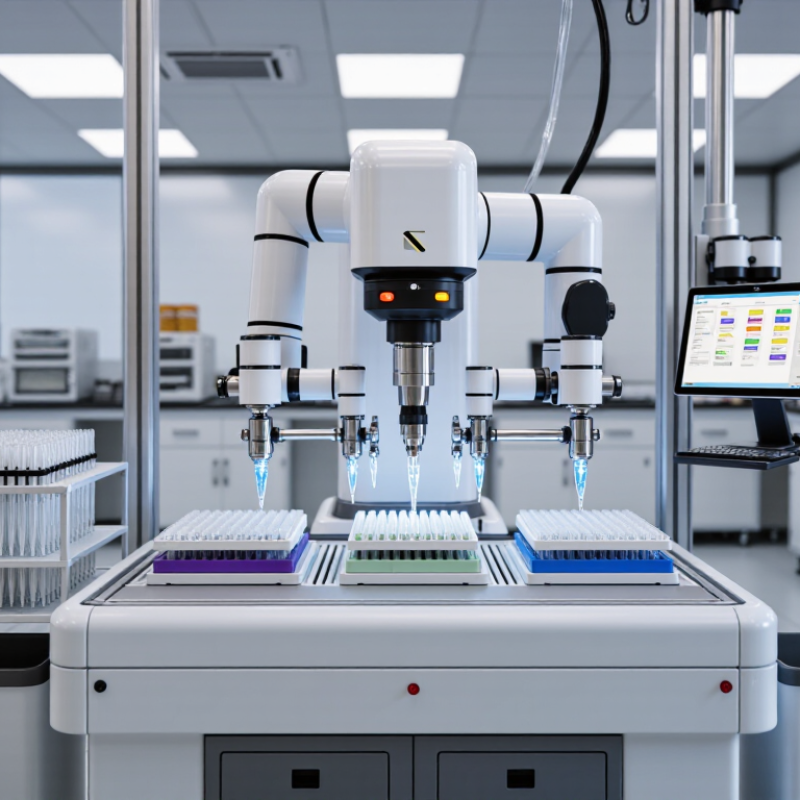
A liquid handling system transfers measured amounts of liquids between containers. It may use hand-held pipettes, electronic pipettes, or automated equipment. Common tasks include dispensing reagents into microplates, preparing dilution series, and moving samples between tubes. The system’s core parts often include pipettes or probes, tips, a deck, and controls that guide volume and movement. Small errors matter.
A good setup fits the workflow, not just the sample count. Manual tools can suit occasional transfers, while automation can help with repetitive, high-volume work.
Tips: Check the required volume range, liquid type, plate format, and cleaning needs before choosing equipment. Test the method with water or a representative liquid; thicker fluids may behave differently.
Reliable results depend on more than the instrument. Operators need consistent techniques, suitable tips, and routine checks for leaks, clogs, and calibration.
For example, an air bubble in a probe can change a transfer, even when the displayed volume looks correct.
Record settings and deviations so runs can be compared. One limitation is easy to overlook: automation can repeat a poor method very consistently.
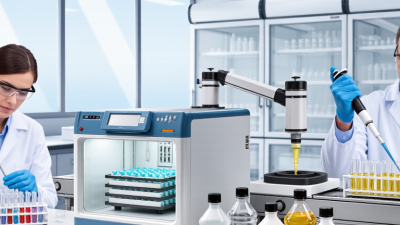
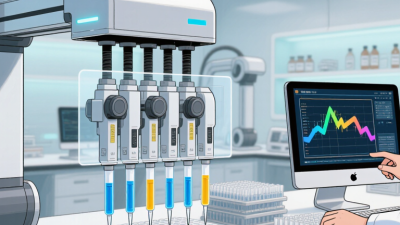
Automated liquid handling begins with a worklist: software maps samples, volumes, and destinations across a deck of tubes or microplates. A pipetting head moves to each well, lowers a disposable tip, aspirates liquid, then dispenses it at a programmed speed and height. Air-displacement pipettes suit many aqueous samples; positive-displacement tools can handle viscous or volatile liquids more consistently. Small details matter. Tip changes, mixing cycles, and liquid-specific settings help limit carryover and uneven transfers.
Sensors can check tip presence, liquid levels, and deck positions, while software records run settings and sample paths. Grand View Research estimated the laboratory automation market at USD 5.3 billion in 2022 and projected 6.6% annual growth from 2023 to 2030. MarketsandMarkets projected growth from USD 5.1 billion in 2023 to USD 7.1 billion in 2028. These forecasts signal growing investment, not guaranteed accuracy. It is not magic. Calibration, suitable tips, and routine checks still matter, especially when droplets cling to a tip or foam disrupts aspiration. A practical system should make those failure points visible, though no workflow removes every judgment call.
There is no single best system for every laboratory. The right choice depends on throughput, required volumes, liquid types, and workflow needs.
Example protocol: This illustrative 8-well transfer shows programmed dispense volumes, not a product benchmark. In a typical workflow, the system positions labware, aspirates liquid from a source, dispenses the target volume, and may verify or repeat steps as required.
What Is the Best Liquid Handling System in 2026?
Key Criteria for Comparing Systems in 2026
The best system depends on the work it must perform, not its maximum advertised speed. Compare accuracy and precision across your real dispensing range, especially with small volumes or viscous samples. Plebani’s review in Clinical Chemistry and Laboratory Medicine estimates that 46–68% of laboratory errors occur in the preanalytical phase. That makes reliable sample identification, consistent mixing, and traceable transfers practical priorities—not optional extras.
Check performance with your own plates, tips, and liquids. ISO 23783-2:2022 provides methods for assessing volumetric performance in automated liquid handling systems, offering a useful basis for comparing test results. Also examine throughput under routine conditions: include deck setup, tip changes, cleaning, and recovery from errors. A fast dispense cycle can still leave a queue of unfinished plates.
Compatibility matters. Review whether the system fits existing instruments, software, and data workflows, and ask how it records exceptions. Consider contamination controls, service access, and the time needed to train operators. Then run a small pilot with representative samples. It may expose awkward steps a specification sheet misses. No system removes every source of variation; even a well-designed comparison can overlook the odd liquid that behaves differently on a humid Tuesday.
Choosing a liquid handling system in 2026 starts with the task, not the instrument. Manual single-channel pipettes suit occasional transfers, small sample sets, and protocols that change often. Multichannel pipettes speed up repetitive work, such as filling a 96-well plate. Electronic models can make aspiration and dispensing more consistent, especially across long runs. They still require suitable tips, routine checks, and trained users. A rushed setup can undo that consistency.
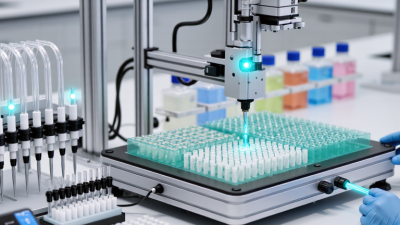
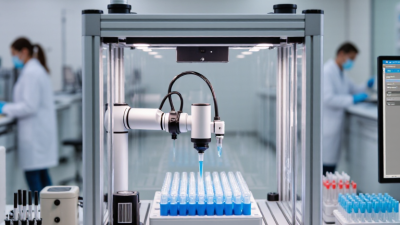
For larger workloads, benchtop robotic systems can handle serial dilutions, reagent addition, and sample preparation across many wells. Specialized low-volume dispensers may help with assays that use tiny volumes, though liquid properties and plate compatibility matter. Setup takes time. Match deck capacity and throughput to the actual workload, not an ambitious future estimate. Fit matters more. Consider how easily staff can clean the system, change labware, and recover from a paused run. Even a well-designed workflow can feel slower during setup, and that trade-off is easy to underestimate.
The best liquid handling system in 2026 is the one that fits your assay, not the one with the largest throughput claim. Start with the workbench reality: daily sample count, plate format, liquid viscosity, transfer volumes, and how often methods change. If technicians handle a few plates with frequent protocol adjustments, flexible pipetting may be more useful than a fixed, high-speed platform. For repetitive screening, compare unattended run time, deck capacity, and recovery after an error. Small details matter. ANSI/SLAS 1-2004 (R2012) specifies a standard microplate footprint of 127.76 × 85.48 mm, a useful check when assessing plate compatibility and deck layout.
Next, measure performance with your actual liquids and volumes. ISO 8655-2:2022 sets separate systematic- and random-error limits for piston-operated volumetric apparatus across nominal volumes; one accuracy figure cannot describe every transfer. Ask suppliers for raw validation data, then test low-volume dispensing, viscous reagents, and carryover in your own workflow. A useful warning: automation can repeat a flawed method very consistently. I would pilot the system before committing, even if that delays the purchase. Include training, service response, consumables, and data integration in the cost model. The best fit may be less glamorous, but it should make tomorrow’s routine run easier to reproduce.
| System Type | Best Suited For | Typical Workflow Capacity | Key Advantages | Main Trade-Offs | What to Check Before Choosing |
|---|---|---|---|---|---|
| Manual single-channel pipette | Low-volume work, occasional transfers, assay development, and flexible protocols | One transfer at a time; overall throughput depends on the operator and protocol | Low equipment cost, straightforward setup, and high flexibility for different labware | Labor-intensive for repetitive work; results can vary with operator technique | Volume range, pipette fit and calibration, compatible tips, ergonomics, and required accuracy |
| Electronic single-channel pipette | Repeated transfers where consistent aspiration and dispensing settings are valuable | One transfer at a time, with programmable dispensing or mixing functions on some models | Can reduce repetitive thumb movement and help standardize common pipetting steps | Higher purchase and maintenance costs than a basic manual pipette; requires charging or power management | Programmable modes, volume range, battery life, service availability, and ease of cleaning |
| Manual multichannel pipette | Plate-based assays with repeated transfers across aligned wells | Multiple wells per operation; channel count and plate format determine coverage | Faster plate filling than single-channel pipetting without a large instrument footprint | Requires consistent plate alignment and compatible spacing; repetitive use can be tiring | Channel count, plate compatibility, tip loading, volume range, and ease of service |
| Electronic multichannel pipette | Frequent microplate transfers requiring repeatable, parallel dispensing | Multiple wells per operation, with programmable repeated-dispense functions on some models | Can improve workflow consistency and reduce repetitive manual actions | Costs more than manual options and may need careful setup for different plate types | Plate geometry, channel alignment, tip availability, software functions, and calibration support |
| Compact benchtop automated liquid handler | Routine plate preparation, serial dilution, reagent addition, and repeatable batch workflows | Automates defined runs across plates or tubes; practical capacity depends on deck layout and method design | Reduces hands-on repetition and can improve protocol consistency when methods are validated | Requires method setup, training, routine maintenance, and compatible consumables | Deck capacity, pipetting range, liquid classes, labware compatibility, contamination controls, and data export |
| Flexible automated liquid handling workstation | Labs running several automated protocols or handling varied labware and transfer steps | Multiple work areas and process steps may be supported; capacity varies substantially by configuration | Greater workflow flexibility and potential integration with devices such as plate readers or incubators | Higher space, implementation, validation, and support requirements than a compact unit | Integration options, scheduling software, access for maintenance, safety, validation, and service response |
| Integrated robotic workflow | High-throughput processes that combine liquid handling with several downstream instruments | Can coordinate multi-step workflows; actual throughput is limited by the slowest process and system configuration | Supports unattended or extended operation and can connect multiple process stages | Most complex to plan, validate, operate, and maintain; requires suitable space and technical support | Workflow bottlenecks, robotics and safety requirements, software interoperability, contingency plans, and total cost of ownership |
Selection note: There is no single best system for every laboratory. Compare systems using your actual liquid types, transfer volumes, plate formats, daily sample load, required reproducibility, available staff, and budget. Confirm performance with representative methods and consumables before purchase.