
How to Choose the Right Liquid Handling Equipment?
Choosing the right liquid handling equipment can shape accuracy, productivity, and laboratory safety. The best option depends on more than price or brand reputation. Volume range, liquid viscosity, temperature, container type, and required precision all matter. A pipette designed for aqueous samples may perform poorly with oils, foaming solutions, or solvents. That difference matters.
Experienced laboratory teams usually begin with the workflow. They examine how often liquids are transferred, how many samples are processed, and where errors may occur. Manual pipettes can suit low-throughput work and changing protocols. Electronic systems may reduce repetitive strain and improve consistency across larger batches. Automated platforms can increase capacity, but they require validated methods, compatible consumables, and trained operators. More automation is not always better.
Material compatibility also deserves careful attention. A corrosive liquid can damage seals, while a viscous sample may need wider tips or slower aspiration. Calibration records, preventive maintenance, and clear operating procedures support reliable results. Manufacturer specifications provide a useful starting point, but real samples should be tested under actual conditions. Small assumptions can create large deviations. Even skilled users overlook this sometimes.
A practical selection process compares performance, usability, cleaning requirements, service support, and total ownership cost. Consider the person holding the device at the end of a long shift. Hand fatigue, awkward controls, and unclear displays can affect results. The right liquid handling equipment should fit both the science and the people performing it. Careful evaluation creates a stronger foundation for dependable laboratory work.
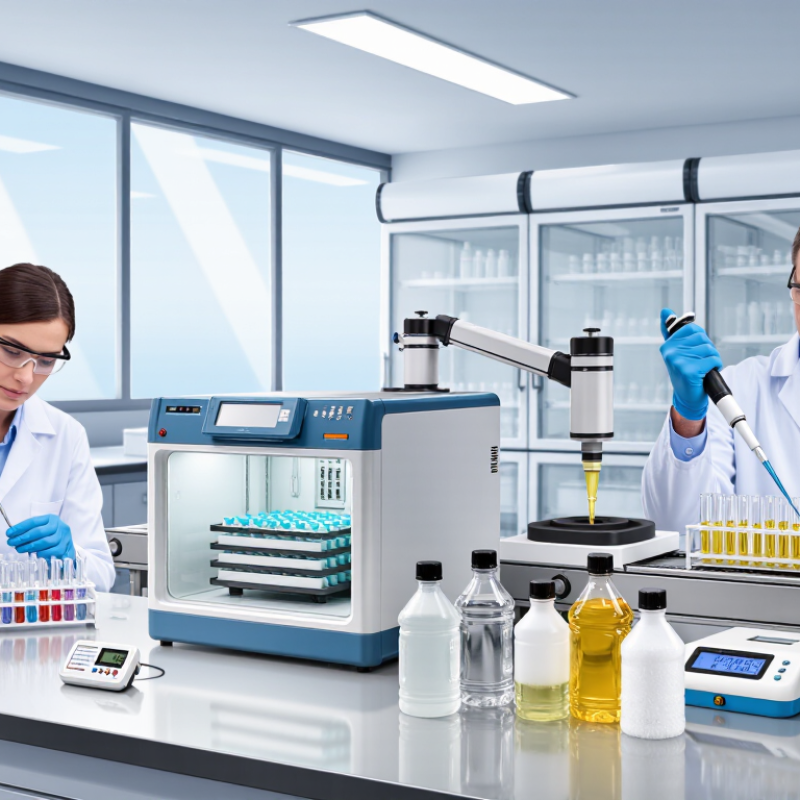
Understanding the Role of Liquid Handling Equipment
How to Choose the Right Liquid Handling Equipment?
Understanding the Role of Liquid Handling Equipment
Liquid handling equipment does more than move liquid between containers. It controls volume, repeatability, contamination risk, and operator effort. In a busy laboratory, one small dispensing error can affect many samples. Equipment should match the liquid’s viscosity, temperature, volatility, and required volume. Pipettes suit flexible, low-volume work. Dispensers support repeated transfers. Pumps help manage larger volumes or continuous flow. Automated systems improve consistency when sample numbers increase. However, automation cannot correct poor procedures or unsuitable consumables.
Tips: Define the smallest and largest volumes first. Check material compatibility with every liquid. Review calibration records before routine use. Use filtered tips when contamination control matters. Leave space for cleaning and maintenance. A simple written workflow often reveals hidden handling problems.
In practice, choosing equipment requires observation, not only specifications. Watch how users hold containers, change tips, and read liquid levels. These details influence real performance. Temperature changes may alter viscosity and delivery accuracy. Some liquids cling to tips, while others form bubbles. Those effects are easy to underestimate. A perfect setup rarely exists. Even experienced teams should question old habits and verify performance with suitable tests. Independent calibration, documented training, and traceable records make results easier to trust.
| Equipment Type | Typical Working Volume | Best Used For | Key Advantages | Main Limitations | Important Selection Factors |
|---|---|---|---|---|---|
| Air-Displacement Pipette | Approximately 0.1 µL to 10 mL, depending on the format | Routine laboratory dispensing of aqueous solutions | Versatile, widely used, easy to operate, and available in single- and multichannel formats | Performance can be affected by evaporation, temperature, liquid viscosity, and volatile solvents | Volume range, channel count, ergonomic design, calibration requirements, and tip compatibility |
| Positive-Displacement Pipette | Typically from low microliter volumes to several milliliters | Viscous, volatile, dense, foaming, or temperature-sensitive liquids | The piston contacts the liquid directly, reducing the influence of vapor pressure and liquid properties | Specialized tips or capillaries may be required, increasing operating cost | Liquid viscosity, volatility, density, required precision, and consumable availability |
| Electronic Pipette | Approximately 0.1 µL to 10 mL, depending on the model | Repetitive dispensing, serial dilution, and multi-step protocols | Programmable dispensing modes can improve consistency and reduce hand fatigue | Requires charging or battery maintenance and generally costs more than manual pipettes | Battery life, programmable modes, user interface, weight, balance, and data connectivity |
| Repeating Dispenser | From low microliter aliquots to milliliter-scale repetitive dispensing | Dispensing the same volume repeatedly from a single source | Fast and efficient for plate filling, reagent addition, and aliquoting | Less suitable for highly viscous or particulate liquids unless specifically designed for them | Dispense-volume range, reservoir type, liquid compatibility, tip design, and residual volume |
| Serological Pipette with Pipette Controller | Commonly 1 mL to 50 mL | Cell culture, media transfer, and larger-volume liquid movement | Suitable for rapid transfer of relatively large liquid volumes with good visual control | Lower suitability for small-volume analytical dispensing and highly precise micro-volume work | Capacity, controller speed, sterility, filter protection, liquid compatibility, and user ergonomics |
| Bottle-Top Dispenser | Usually milliliter-scale volumes, with adjustable repeated dispensing | Frequent dispensing of acids, buffers, solvents, and other reagents from bottles | Reduces repeated pouring and can improve safety and workflow efficiency | Must be chemically compatible with the reagent and correctly fitted to the bottle | Chemical resistance, volume adjustment, bottle-thread compatibility, sealing, and safety features |
| Liquid-Handling Robot | From sub-microliter transfers to milliliter-scale operations, depending on the platform | High-throughput screening, assay setup, normalization, and repetitive workflows | Improves process standardization, throughput, traceability, and unattended operation | Higher initial investment, method-development requirements, and greater maintenance complexity | Throughput, deck capacity, supported labware, minimum volume, contamination control, and software integration |
| Peristaltic Pump | From low flow rates to continuous pumping at larger laboratory or process scales | Continuous transfer of liquids, media circulation, and shear-sensitive applications | Only the tubing contacts the liquid, simplifying fluid-path cleaning and replacement | Tubing wear can affect flow accuracy; pulsation may occur during pumping | Flow range, tubing material, chemical compatibility, pressure, pulsation control, and sterilization method |
| Syringe Pump | Microliter to milliliter-scale delivery, depending on syringe size | Precise, controlled infusion or withdrawal at low flow rates | Provides accurate programmable flow for experiments requiring gradual or continuous delivery | Limited reservoir capacity and possible interruption when the syringe must be refilled | Flow-rate range, syringe volume, force capacity, back pressure, compatibility, and programmability |
| Microplate Washer | Designed for multiwell plates rather than a single fixed volume | Washing steps in immunoassays, cell-based assays, and high-throughput workflows | Automates aspiration and dispensing across multiple wells to improve repeatability | Requires validated settings for different plate geometries and liquid volumes | Plate format, residual volume, dispensing uniformity, aspiration control, and cleaning procedure |
| Selection guidance: Choose equipment according to liquid properties, required volume range, accuracy and precision, throughput, sterility, chemical compatibility, contamination risk, operator ergonomics, and calibration requirements. Always verify performance with the actual liquid, consumables, temperature, and operating procedure before routine use. | |||||
Related Posts
-
China Best Liquid Handling Equipment Manufacturers?
-
2026 Top Liquid Handling Pipette Types for Global Labs
-
Top Scientific Pipette Types Explained for 2026?
-
2026 Best Rainin Compatible Pipette Tips for Precision and Accuracy?
-
How to Choose the Right Liquid Handling System for Your Lab?
-
What Is a Liquid Handling System and How Does It Work?