Who Are the Top Liquid Handling System Suppliers in China?
China has become a significant manufacturing base for laboratory automation and precision fluid-control equipment. Its liquid handling system suppliers serve pharmaceutical research, clinical testing, biotechnology, food analysis, and industrial laboratories. However, identifying the “top” companies requires more than checking production volume or website claims.
A reliable comparison should examine dispensing accuracy, repeatability, software usability, contamination control, and integration options. For example, a laboratory may need a compact benchtop platform for 96-well plates, while a production facility may require robotic liquid transfer across multiple workstations. Supplier experience matters here. Companies with documented installations, trained engineers, and responsive technical support usually provide greater long-term value.
Look closely at the details.
Certifications, validation documents, calibration procedures, and service coverage can reveal a supplier’s professional maturity. Strong manufacturers may also offer custom grippers, barcode tracking, pump modules, and laboratory information system connectivity. Yet performance data is not always presented in comparable formats. Some suppliers publish impressive specifications without explaining testing conditions, maintenance intervals, or failure rates.
This guide will introduce notable Chinese suppliers and assess their capabilities from a practical buyer’s perspective. It will consider product design, manufacturing consistency, application expertise, export experience, and after-sales support. The list should not be treated as permanent. Market reputation changes, new technologies emerge, and even established suppliers can deliver uneven results between projects. Careful verification remains necessary before procurement, especially when accuracy, sample integrity, and regulatory documentation affect critical laboratory decisions.
What Is a Liquid Handling System?
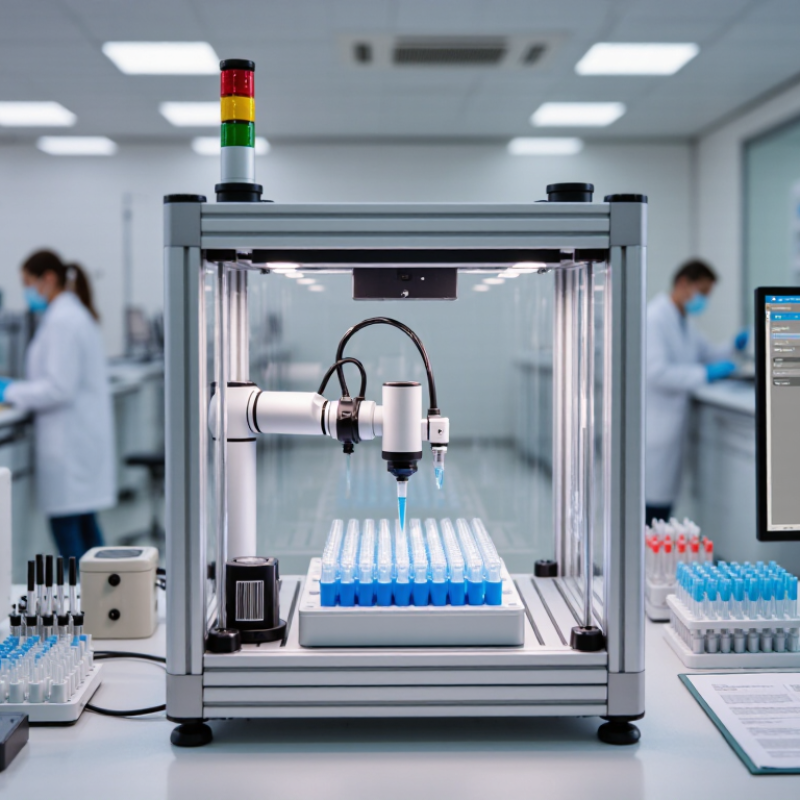
A liquid handling system moves, measures, and dispenses fluids with controlled accuracy. It may include pipetting heads, pumps, valves, robotic arms, reservoirs, sensors, and software. In a laboratory, it can transfer microliter samples into a 96-well plate, mix reagents, wash vessels, and record each movement.
The system reduces repetitive manual work and supports consistent testing. Grand View Research reported that the global laboratory automation market was valued at approximately USD 6.6 billion in 2023. Its growth reflects stronger demand for reproducible workflows. MarketsandMarkets also projects continued expansion in automated liquid handling, driven by pharmaceutical research, diagnostics, and biotechnology. The exact performance still depends on fluid viscosity, tip design, calibration, and software settings.
Small errors matter.
In practical validation, technicians often inspect droplets left inside tips or wells. A system may meet its advertised volume range but perform differently with foaming liquids or very small transfers. That assumption can fail. Reliable evaluation should include accuracy, precision, carryover control, maintenance access, and data traceability. Chinese suppliers are commonly compared through these technical measures, not appearance alone. Strong documentation, responsive training, and verified calibration records also indicate professional capability. Buyers should request application trials using their actual liquids and plate formats. One overlooked detail is workflow recovery after a power interruption. A fast robot is not always a dependable system.
Who Are the Top Liquid Handling System Suppliers in China? — What Is a Liquid Handling System?
A liquid handling system is an automated laboratory platform that aspirates, dispenses, transfers, and mixes liquids with controlled volume and precision. When comparing suppliers in China, laboratories commonly assess compatibility with standard microplate formats, throughput, accuracy, software integration, and after-sales support.
The chart shows the number of wells in widely used SBS-format microplates. Supporting multiple plate formats helps a liquid handling system serve applications ranging from larger-volume sample preparation to high-density screening and miniaturized assays.
Who Are the Leading Liquid Handling System Suppliers in China?
Leading liquid handling system suppliers in China are defined by engineering depth, not catalogue size.
The strongest suppliers usually combine automated pipetting, dispensing, and sample preparation with local service teams. They support hospitals, pharmaceutical laboratories, diagnostics facilities, and university research centers.
A 2024 MarketsandMarkets report estimates that the global liquid handling systems market will continue expanding through 2029, driven by laboratory automation and higher testing volumes. China remains an important manufacturing and consumption base in Asia. Industry analyses from Grand View Research also highlight automation, precision, and workflow integration as major growth factors.
In practice, experienced buyers should examine pipetting accuracy, repeatability, software compatibility, and maintenance response times. A system may look impressive during a demonstration. Daily performance can be different.
No ranking is perfect.
Tips: Ask suppliers for raw accuracy data, not only marketing percentages. Request application tests using your real sample volume, viscosity, and plate format. Check calibration records and operator training plans. These details often reveal more than a polished showroom.
Leading Chinese suppliers also stand out through customization. They may adapt grippers, deck layouts, barcode modules, or temperature-control units for local workflows. However, customization can increase validation time and service complexity. That part is easy to underestimate. Buyers should compare total ownership costs, including consumables, software updates, spare parts, and technician travel. A reliable supplier should provide traceable documentation, realistic delivery schedules, and responsive technical support.
How Do Chinese Suppliers Compare Across Key Product Categories?
China’s liquid handling suppliers now cover manual pipettes, electronic devices, automated workstations, and compatible consumables. This breadth matters because laboratories rarely buy one product alone. They build workflows around accuracy, throughput, software, and service. Grand View Research estimates the global automated liquid handling systems market will expand at about 7% annually through 2030. Chinese suppliers are positioning themselves within that growth, especially in mid-throughput instruments and cost-sensitive laboratory environments.
Across manual and electronic pipettes, Chinese manufacturers often compete through pricing, ergonomic design, and rapid replacement availability. Accuracy claims should still be checked against ISO 8655 test results, not brochure language. In automated systems, the stronger suppliers offer modular deck layouts, barcode tracking, calibration records, and integration with laboratory information systems. Research and Markets identifies automation, miniaturization, and reproducibility as major market drivers. Chinese platforms can perform well in routine dispensing and sample preparation, although software usability and international service coverage remain uneven.
Consumables show another clear difference. Domestic suppliers can shorten delivery times for tips, reservoirs, and plates, but material consistency deserves careful validation. A 2024 industry review by MarketsandMarkets links recurring consumables demand with the expansion of high-throughput testing. That creates opportunity, but not every low-cost tip fits every instrument reliably. My practical concern is simple: published precision data often reflects ideal conditions. Laboratories should test performance with their own liquids, temperatures, and operators before scaling. That step is sometimes skipped.
How Can Buyers Select the Right Supplier for Their Needs?
Choosing among China’s top liquid handling system suppliers requires more than comparing robot speed.
According to Grand View Research, the global automated liquid handling market was valued at about USD 1.6 billion in 2023. Its forecast also indicates strong growth through 2030. This expansion reflects rising demand for repeatable sample preparation, higher throughput, and reduced manual errors.
Buyers should begin with application fit. Ask suppliers to demonstrate pipetting accuracy using your actual volumes, liquids, tips, and labware. A system handling 1,536-well plates may be unsuitable for viscous samples. Request raw test data, not only brochure specifications.
Review ISO 9001 or ISO 13485 certification when relevant. Examine calibration records, software traceability, and contamination-control procedures.
Small details matter.
- Can operators change a deck layout quickly?
- Are replacement parts available locally?
- Does technical support respond in hours or days?
MarketsandMarkets has projected substantial growth in automated liquid handling, driven partly by pharmaceutical and biotechnology laboratories. That trend can make suppliers appear equally capable. They are not.
Compare total ownership costs, including installation, training, consumables, maintenance, and software updates. Require factory acceptance testing and site acceptance testing.
A short pilot is valuable, even when it delays purchasing. Some systems perform well with water but struggle with foaming buffers or low-volume transfers.
I have found that service promises often sound clearer than service contracts. Buyers should therefore request response times, escalation procedures, and customer references from similar laboratories.