Why Does Pipette Science Matter for Global Buyers?

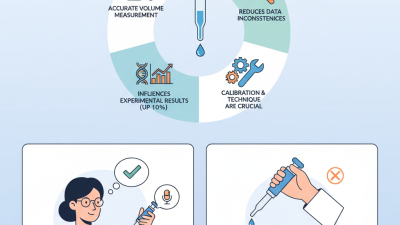
Why does pipette science matter for global buyers? Because every liquid transfer can influence product quality, testing confidence, and purchasing risk. A pipette is not merely a plastic or metal tool. It is a controlled measurement system that must deliver consistent volume, even when users, climates, and workflows differ.

Pipette science explains accuracy, precision, calibration, ergonomics, and compatibility with laboratory liquids. A buyer comparing suppliers should examine more than advertised volume ranges. Ask how instruments perform at 20 microliters, after repeated daily use, and under changing temperatures. Small errors can become expensive when multiplied across thousands of samples. A reliable supplier should provide traceable calibration records, clear tolerances, maintenance guidance, and responsive technical support. These details reveal professional capability.

Look closely.

Global purchasing also requires practical judgment. Shipping conditions may affect packaging, while local service networks can determine downtime. A low initial price may hide replacement costs, training gaps, or inconsistent performance. Yet no specification sheet tells the whole story. Even respected instruments need proper handling, regular verification, and trained operators. Buyers sometimes overtrust certificates and undercheck real workflow demands. That is a reasonable weakness to acknowledge. The strongest decisions combine documented evidence with hands-on evaluation, sample testing, and supplier communication. This approach helps laboratories choose pipettes that remain dependable across borders, applications, and years of routine use.

Why Does Pipette Science Matter for Global Buyers?

What Is Pipette Science and Why Does It Matter?

Pipette science is the study of how pipettes aspirate, hold, and dispense liquids accurately. It covers piston movement, air cushions, tip sealing, temperature, and user technique. A pipette is not simply a small tube with a button. Small details matter. At 100 microliters, a 10-microliter error represents ten percent. That difference can affect test results, sample comparisons, and production decisions.

In practical laboratory work, trained staff often check pipettes through gravimetric testing. They dispense water onto a calibrated balance and compare the measured mass with the expected volume. Temperature and evaporation must also be recorded. This process examines accuracy and precision, which are different qualities. Testing aligned with ISO 8655 can provide a common reference, but laboratories still need local verification. Calibration records should show the date, volume range, method, equipment traceability, and next review. Paperwork alone proves little.

Global buyers should also consider how a pipette performs in real workflows. A model suitable for water may behave differently with viscous, volatile, or foaming liquids. Tip compatibility, operating force, maintenance access, and technical support affect long-term value. Specifications can look impressive. Actual performance may change when operators, temperatures, or sample types change. Buyers should request independent test data, clear tolerances, and training materials. No test represents every laboratory perfectly. The evidence must match the work, not only the catalogue numbers.


How Pipette Design Affects Accuracy and Reproducibility

Why Does Pipette Science Matter for Global Buyers?

How Pipette Design Affects Accuracy and Reproducibility

Pipette design directly shapes how much liquid reaches the sample. A smooth plunger reduces sudden pressure changes during aspiration. A well-sealed tip connection helps prevent air leakage. Small details matter. Even a slight seal gap can produce inconsistent volumes, especially with low-volume transfers.

Ergonomic resistance also affects accuracy. When the plunger feels stiff, users may press too quickly or stop between positions. That movement can create droplets inside the tip. Clear volume markings help, but markings alone cannot correct poor technique. In routine laboratory work, consistent hand position and steady pressure remain essential. The instrument should support these habits, not fight them.

Reproducibility depends on more than one successful measurement. It requires similar results across users, days, and sample types. Tip geometry, piston travel, liquid temperature, and viscosity all influence performance. Buyers should review calibration records, operating ranges, leak testing, and validation data before purchasing. However, technical documents may not reflect every real working condition. That is an important limitation. A pipette can perform well with water and behave differently with dense buffers or volatile liquids. Periodic verification under actual laboratory conditions provides stronger evidence than specifications alone. Mistakes still happen. Good design makes them easier to detect and less likely to repeat.

Which Standards Govern Pipette Quality and Performance?

For global buyers, pipette quality is not defined by appearance alone. The key reference is ISO 8655, which covers piston-operated volumetric apparatus, including air-displacement pipettes. It addresses accuracy, repeatability, leakage, and test conditions. These details matter when a 1 µL transfer affects a costly assay.

ISO 8655 does not automatically certify every pipette. It provides technical requirements and measurement methods. Reliable suppliers should show calibration results, tested volume ranges, and environmental conditions. Calibration performed by an ISO/IEC 17025-accredited laboratory adds stronger evidence. Buyers should also check whether documents identify the tested instrument, date, operator, and uncertainty. A certificate alone can mislead. I have seen paperwork that looked complete but lacked the actual measurement data.

Tips: Ask for gravimetric test results based on the applicable ISO 8655 method. Confirm performance at low, middle, and high settings. Review the stated tolerances, not only the word “calibrated.” Check tip compatibility, because poor sealing can distort results. Train users on steady plunger movement and vertical aspiration. Temperature matters, too. Water density changes with temperature, affecting gravimetric testing. Local regulations may also require specific documentation, electrical compliance, or quality records. These requirements differ across markets, so purchasing teams should verify them with qualified local specialists. Even strong laboratory controls cannot remove every handling error. Calibration is a process, not a permanent guarantee.

How Global Buyers Evaluate Pipette Suppliers and Products

Why Does Pipette Science Matter for Global Buyers?

Global buyers evaluate pipette suppliers through evidence, not attractive product photos. The 2024 Grand View Research market assessment valued the global pipette market at more than USD 1 billion, reflecting strong demand for reliable liquid handling. That scale also increases buyer risk. A low-cost pipette can create repeated volume errors across thousands of wells. Small deviations become expensive quickly.

ISO 8655-2:2022 separates pipette performance into systematic and random error. Buyers should request both values at relevant volumes, not only a single accuracy claim. Calibration records should identify the test method, temperature, operator, and measurement uncertainty. Ask for service intervals, spare-part availability, and training support. These details matter when a shipment crosses several climates.

A certificate is not enough.

In practical evaluations, I would test a 100 μL setting with water, calibrated balances, and several operators. Tip fit deserves attention too. Poor sealing may cause leakage, even when the pipette passes a basic check. Suppliers should explain traceability to national or international measurement standards. They should also disclose limitations, such as performance changes after sterilization or long storage.

The 2023 ISO/IEC 17025 framework emphasizes competent laboratories and valid measurement results. Buyers can use this principle when reviewing supplier calibration partners. Still, no evaluation is perfect. Human technique, liquid viscosity, and local maintenance capacity can change results. A reliable supplier admits those variables instead of promising universal precision.

Why Does Pipette Science Matter for Global Buyers? - How Global Buyers Evaluate Pipette Suppliers and Products

Evaluation Dimension Measurable Indicator Reference Benchmark or Requirement Why It Matters to Global Buyers Recommended Evidence
Pipetting accuracy Systematic error at nominal volume For a 100 µL single-channel piston pipette, ISO 8655-2:2022 gives a maximum systematic error reference of ±0.8 µL for the applicable standard configuration. Accurate dispensing protects assay concentration, test validity, and material costs. Accredited calibration report with nominal volume, test volume, environmental conditions, and results.
Pipetting precision Random error or repeatability For a 100 µL single-channel piston pipette, ISO 8655-2:2022 gives a maximum random error reference of ±0.3 µL for the applicable standard configuration. High repeatability reduces variation between operators, sites, and production batches. Repeat-dispense data, standard deviation, coefficient of variation, and test replicates.
Calibration traceability Traceable measurement chain Calibration should be linked to recognized national or international measurement standards; ISO/IEC 17025 is the commonly used competence standard for calibration laboratories. Traceability supports audits, regulated workflows, and cross-border acceptance of test results. ISO/IEC 17025-accredited laboratory certificate or documented traceability statement.
Calibration method Gravimetric test procedure ISO 8655-6:2022 specifies a gravimetric reference method for determining the performance of piston-operated volumetric apparatus. A recognized method makes supplier results more comparable across countries and laboratories. Calibration procedure identifying balance resolution, water temperature, evaporation control, and calculations.
Volume range and adjustment Nominal range, increment, and operating mechanism Common adjustable laboratory formats include 0.1–2.5 µL, 2–20 µL, 20–200 µL, and 100–1,000 µL; the exact range must be verified for each model. Correct range selection prevents operation near the limits of a pipette, where uncertainty can increase. Technical datasheet, volume-setting resolution, operating-force data, and performance tables across the range.
Tip compatibility and sealing Fit, leakage, and tip-retention consistency The pipette and tip system should be validated together; compatibility is application-specific and should not be inferred solely from nominal volume. Poor sealing can cause leaks, inconsistent aspiration, aerosols, and inaccurate results. Compatibility matrix, leak-test results, tip-ejection force, and fit verification at minimum and maximum volumes.
Contamination control Sterility option and decontamination procedure For autoclavable components, buyers commonly verify exposure to a validated cycle such as 121 °C for approximately 15–20 minutes; the supplier's instructions take precedence. Decontamination capability is critical in molecular biology, microbiology, diagnostics, and pharmaceutical work. Autoclave validation data, disassembly instructions, chemical compatibility list, and contamination-control documentation.
Ergonomics and operator safety Operating force, balance, and ejection effort No single global force limit applies to every pipette; buyers should compare measured force data and conduct user trials for repetitive workflows. Lower physical strain can reduce fatigue and support safer, more consistent repetitive work. Independent force measurements, ergonomic assessment, user-trial records, and maintenance requirements.
Environmental and chemical durability Material resistance and operating conditions Chemical resistance depends on the liquid, concentration, temperature, exposure time, and component material; no universal resistance claim should be accepted without a compatibility table. Durability affects service life, contamination risk, and total cost of ownership. Material specifications, chemical-resistance data, operating-temperature range, and accelerated-life test results.
Regulatory and market access Applicable conformity and substance requirements Depending on destination and intended use, buyers may review requirements such as RoHS Directive 2011/65/EU, REACH Regulation (EC) No. 1907/2006, and local electrical or medical-device rules. Complete compliance documentation reduces customs, procurement, and market-entry risks. Declaration of conformity, restricted-substance statement, safety data, labeling information, and destination-market documents.
Service and lifecycle support Spare parts, serviceability, and recalibration access A practical procurement benchmark is documented service coverage, replaceable wear parts, and a defined recalibration process; the interval should be risk-based rather than assumed to be universally fixed. Reliable support reduces downtime and improves the total cost of ownership over the instrument's working life. Service-level terms, spare-part availability, repair turnaround targets, user manuals, and calibration scheduling process.
Documentation and traceability Serial number, lot identification, and technical records Each supplied unit should be identifiable through a serial number or equivalent record, with certificates and production information retained according to the buyer's quality system. Document control enables recalls, investigations, audits, and consistent performance monitoring across international sites. Unique identification, certificate matching, change-control notice, batch records, and electronic document access.

Reference basis: ISO 8655-2:2022, ISO 8655-6:2022, ISO/IEC 17025, RoHS Directive 2011/65/EU, and REACH Regulation (EC) No. 1907/2006. Performance limits and compliance obligations should be confirmed for the specific pipette configuration, intended application, and destination market.

What Factors Shape Pipette Selection, Use, and Maintenance?

Why Does Pipette Science Matter for Global Buyers?

What Factors Shape Pipette Selection, Use, and Maintenance?

Pipette selection begins with the liquid, not the catalogue page. Buyers should match the volume range to daily tasks, since repeated work near the upper or lower limit can reduce confidence. Viscous, volatile, or foaming liquids may require different techniques and suitable pipette designs. Small details matter. Tip compatibility, sealing quality, and clear volume markings affect both accuracy and workflow.

User comfort also shapes performance. A heavy pipette can strain the thumb during long sessions, while a stiff plunger may encourage inconsistent pressure. In shared laboratories, simple controls and visible settings reduce training errors. Local temperature, humidity, transport conditions, and available technical support also influence a purchase. Global buyers should request calibration records, operating instructions, and maintenance guidance in accessible formats.

Maintenance is more than occasional calibration. Staff should inspect seals, shafts, and tips for damage, then clean them according to the liquid handled. Regular performance checks can reveal drift before it affects a large batch of results. However, maintenance plans are often too optimistic. Teams may schedule calibration but overlook user technique or storage position. That gap deserves honest review. A well-selected pipette still depends on careful handling, consistent training, and records that show what happened over time.