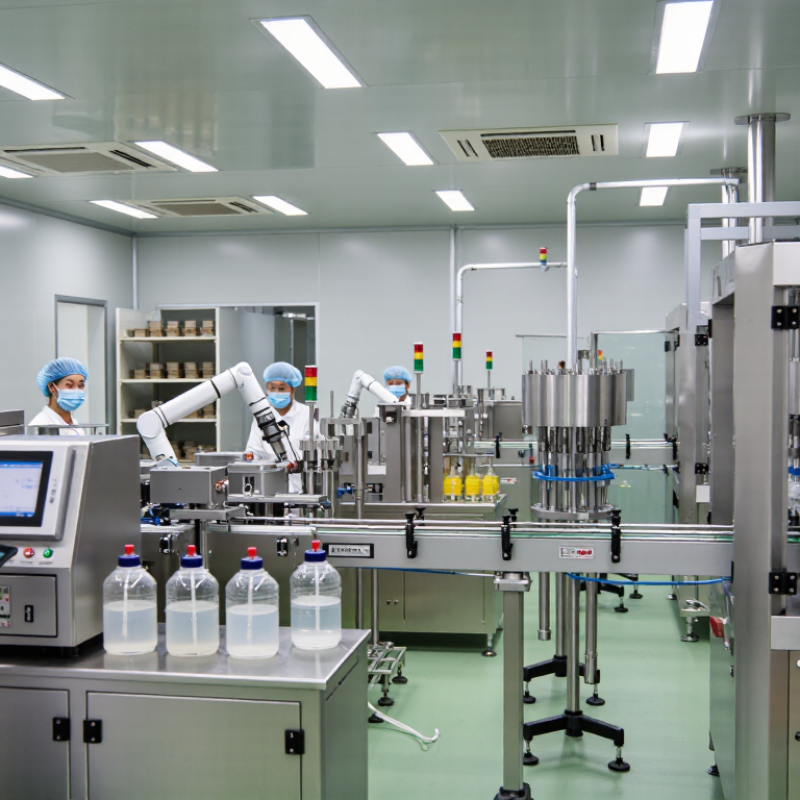
China has become a major manufacturing base for laboratory and industrial liquid handling equipment. Its suppliers serve pharmaceutical, biotechnology, diagnostics, food processing, and chemical production facilities. Products range from precision pipettes and automated workstations to peristaltic pumps, filling systems, and stainless-steel transfer units.
Market data supports this growing importance. Grand View Research estimates that the global liquid handling systems market reached approximately USD 4.5 billion in 2023, with continued expansion expected through 2030. MarketsandMarkets also forecasts strong growth, although its market boundaries and figures differ. These differences matter. They show why buyers should compare methodologies before trusting a single number.
China’s strongest manufacturers typically combine CNC machining, cleanroom assembly, calibration, and responsive technical service. Experienced suppliers can provide flow-rate testing, material certificates, validation documents, and application trials. A reliable manufacturer should also explain tolerances clearly, rather than promising unrealistic accuracy. Small details matter, such as whether a pump maintains stable flow at low speed or whether a pipette remains accurate after repeated sterilization cycles.
No ranking is universally correct. Buyer priorities vary.
This guide examines leading Chinese manufacturers through measurable criteria, including product reliability, engineering capability, certifications, customization, export experience, and after-sales support. It also considers practical evidence, such as factory audits, published specifications, customer references, and independent testing. Some companies excel in automation, while others perform better in specialized pumps or high-volume filling lines. The best choice depends on the application, not merely on company size or online visibility. Mistakes remain possible, especially when supplier information is incomplete. Careful verification is essential.
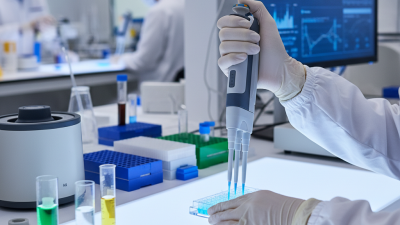
China’s liquid handling market now covers manual, electronic, and robotic systems. Each option fits different laboratory workloads and accuracy requirements. Manual pipettes remain practical for small batches and occasional testing. They also provide direct control during unusual sample preparation. However, operator fatigue can cause inconsistent aspiration and dispensing. Electronic systems reduce hand strain and support programmable volume settings. They are useful when technicians repeat multi-step workflows throughout the day. Calibration records and regular performance checks remain essential. Automation changes the scale of work.
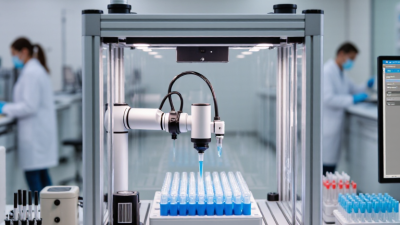
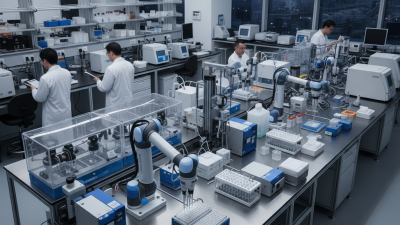
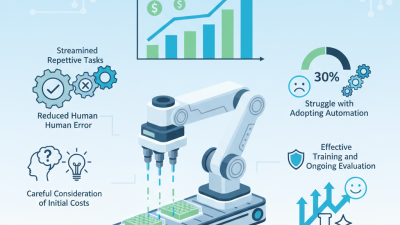
Robotic platforms can manage plate transfers, serial dilutions, and scheduled dispensing with limited intervention. Their value depends on dependable software, compatible consumables, and clear maintenance procedures. Experienced buyers should inspect liquid detection, carryover control, and emergency-stop functions. They should also request application data from real laboratory conditions. A polished demonstration may not reflect viscous samples or foaming liquids. That is where evaluation becomes difficult. Chinese manufacturers vary in documentation quality and after-sales response. Some offer strong engineering but weaker user training. Others provide excellent support but limited customization. A careful site test can reveal these gaps before installation.
Typical throughput ranges for liquid handling systems used in laboratory workflows
Manual systems are suitable for low-volume work, electronic systems improve repeatability and workflow speed, while robotic platforms support high-throughput processing and automated plate handling. The ranges shown are representative operating ranges for common laboratory applications; actual performance varies by protocol, liquid type, instrument configuration, and laboratory workflow.
When evaluating liquid handling equipment manufacturers in China, ISO 8655 accuracy should guide the comparison. ISO 8655-2:2022 separates systematic error from random error. Systematic error shows a consistent volume bias. Random error reflects poor repeatability.
For a nominal 100 µL pipette, the standard’s performance table lists maximum systematic error of ±0.8 µL and random error of 0.3 µL. These limits are volume-dependent. One number cannot describe every pipette.
Calibration needs more than a printed certificate. ISO 8655-6:2022 describes gravimetric testing with water, a calibrated balance, controlled temperature, and evaporation protection. A 100 µL test may require repeated dispensing cycles, not one lucky measurement.
NIST Technical Note 1297 also stresses that measurement uncertainty includes repeatability, balance resolution, temperature, and handling effects. Small details matter. A cold tip can change results.
In practical audits, technicians should record the operator, liquid temperature, test volume, balance status, and environmental conditions. Manufacturer data may look excellent, yet real-world performance can drift after servicing or heavy use.
This is where experience becomes important. I would not treat ISO compliance as permanent proof. Calibration intervals should reflect workload and risk. That judgment is sometimes imperfect, but ignoring it is worse.
China Best Liquid Handling Equipment Manufacturers?
Throughput Comparison: 96-, 384-, and 1,536-Well Automation
Throughput changes dramatically with plate format. A 96-well deck suits flexible research, method development, and moderate sample volumes. A 384-well system cuts reagent use and increases parallel processing. A 1,536-well platform supports dense screening, but it demands tighter calibration and smaller dispensing tolerances.
A 2024 MarketsandMarkets report valued the global laboratory automation market at approximately USD 7.1 billion in 2023. It also projected strong growth through 2028, driven partly by higher testing volumes and labor efficiency. These figures support automation investment, but they do not guarantee faster results in every laboratory. Poor scheduling can waste capacity.
Consider a practical example. If one cycle processes 10 plates hourly, 96-well automation handles 960 wells. The same cycle reaches 3,840 wells at 384-well density and 15,360 wells at 1,536-well density. These are theoretical figures, not validated production data. A 2023 SLAS Technology review emphasized that liquid class, precision, contamination control, and deck integration strongly affect real throughput. In daily operation, washing, plate movement, and quality checks often reduce headline capacity. That gap matters.
For Chinese equipment manufacturers, buyers should request measured data under identical conditions. Ask for coefficient-of-variation results, minimum dispense volume, recovery rates, and unattended runtime. A fast platform is not automatically the best platform. Sometimes, slower is safer.
| Performance Dimension | 96-Well Automation | 384-Well Automation | 1,536-Well Automation |
|---|---|---|---|
| Standard microplate format | 96 wells; 8 × 12 array | 384 wells; 16 × 24 array | 1,536 wells; 32 × 48 array |
| Typical plate footprint | SBS-compatible footprint, approximately 127.8 × 85.5 mm | SBS-compatible footprint, approximately 127.8 × 85.5 mm | SBS-compatible footprint, approximately 127.8 × 85.5 mm |
| Typical working volume per well | 50–300 µL | 15–120 µL | 2–12 µL |
| Common liquid-handling technologies | Air-displacement or positive-displacement pipetting; multichannel or 96-channel heads | Air-displacement or positive-displacement pipetting; 384-channel heads or configurable 96-channel tools | Acoustic dispensing, pin-tool dispensing, nanoliter valves, or specialized high-density pipetting |
| Typical dispense volume range | 1–1,000 µL, depending on the installed pipetting tool | 0.5–300 µL, depending on the installed pipetting tool | 0.002–20 µL for high-density dispensing technologies |
| Approximate liquid-transfer CV | Usually 2–5% for routine aqueous transfers | Usually 3–8% at low-to-mid microliter volumes | Often 5–15% at very low volumes; strongly dependent on liquid and technology |
| Typical plate-processing cycle | 1–3 minutes per plate | 2–5 minutes per plate | 4–10 minutes per plate |
| Theoretical well throughput* | 1,920–5,760 wells/hour | 4,608–11,520 wells/hour | 9,216–23,040 wells/hour |
| Practical sustained well throughput** | Approximately 1,350–4,900 wells/hour | Approximately 3,225–9,800 wells/hour | Approximately 6,450–19,600 wells/hour |
| Approximate plates processed per hour | 20–60 plates/hour | 12–30 plates/hour | 6–15 plates/hour |
| Best-fit applications | Sample normalization, PCR setup, ELISA, cell-based assays, genomics, and general-purpose laboratory automation | High-density PCR setup, compound screening, genomics, proteomics, and assay miniaturization | Ultra-miniaturized screening, library preparation, hit-picking, nanoliter reagent addition, and very high-density assay workflows |
| Typical advantages | Broadest liquid-volume range, strong method flexibility, easier validation, and comparatively low implementation complexity | Higher well throughput with reduced reagent consumption and good compatibility with screening workflows | Maximum well density and substantial reagent savings when extremely small transfer volumes are required |
| Typical limitations | Lower well density and higher reagent consumption than 384- or 1,536-well workflows | More sensitive to evaporation, deck alignment, pipette calibration, and low-volume liquid behavior | Higher method-development requirements; greater sensitivity to evaporation, surface tension, viscosity, and plate quality |
| Recommended selection priority | Choose when flexibility, mixed-volume workflows, and robust routine operation are the main priorities | Choose when throughput and reagent savings must increase without moving to ultra-low-volume dispensing | Choose when assay miniaturization and maximum well-level throughput justify specialized dispensing technology |
| Important: The values above are engineering reference ranges for comparing automation formats, not company- or brand-specific specifications. Actual performance depends on liquid properties, pipetting technology, deck configuration, plate type, wash and mixing steps, tip changes, robotic movement, and quality-control requirements. | |||
| *Theoretical throughput assumes one plate is processed continuously and excludes loading, unloading, tip changes, mixing, washing, instrument communication, and error recovery. **Practical sustained throughput assumes approximately 70–85% utilization of the theoretical rate. | |||
China’s strongest liquid handling manufacturers increasingly cover sub-µL transfers through milliliter-scale dispensing. That range matters in genomics, diagnostics, formulation, and analytical testing. At sub-µL volumes, evaporation, surface tension, and tip geometry can change results quickly. At 1 mL and above, flow stability and motor control become more important.
A 2024 MarketsandMarkets report estimates the laboratory automation market will grow from about USD 5.3 billion in 2023 to USD 8.3 billion by 2028. This growth reflects demand for repeatable, automated dispensing. However, market growth is not proof of performance. ISO 8655-2:2022 requires defined accuracy and precision testing for piston-operated volumetric devices. Buyers should request test conditions, calibration records, and results across the complete working range. One impressive data point is not enough.
Test the smallest target volume with the actual liquid, not only water. Compare gravimetric results at room temperature. Check whether the system supports viscosity correction and liquid-level sensing. Ask for carryover data, maintenance intervals, and verification procedures. A useful detail is often overlooked: the disposable tip can influence precision as much as the instrument. I would also leave room for doubt. Sub-µL claims may depend on ideal settings, trained operators, and controlled humidity. Real laboratories are less perfect.
China Best Liquid Handling Equipment Manufacturers?
Selecting a liquid handling manufacturer requires evidence beyond a polished catalog. The ISO Survey 2023 recorded more than 1.26 million ISO 9001 certificates worldwide, showing that quality certification is common, but not automatically meaningful. Ask for current certificates, scope, audit dates, and corrective-action records. ISO 13485 matters when equipment supports medical-device production, because it links design controls, risk management, and traceability. Check the details.
CE marking also needs careful interpretation. The European Commission states that CE marking is a manufacturer’s declaration of conformity, not an independent quality award. Request the applicable directives, technical file summary, risk assessment, and declaration of conformity. For a dispensing system, inspect calibration records, pipette accuracy data, material compatibility, and software validation evidence. A clean factory floor helps, but it proves little alone.
Service performance should be measurable. Set KPIs before purchasing: first response within 24 hours, remote diagnosis within two business days, and critical repair closure within ten working days. Require spare-part availability for at least five years, technician training records, and documented preventive-maintenance procedures. Reports such as Deloitte’s 2024 Global Life Sciences Outlook emphasize operational resilience and digital quality systems, but manufacturers still vary widely in execution. That gap is easy to miss. I would also request three customer references using similar liquid volumes and viscosities. One weakness remains: published KPI averages are rarely independently audited. Treat sales promises as hypotheses, then test them with acceptance trials, service logs, and failure simulations.