Why Are Liquid Handling Devices Essential for Modern Laboratories?
In modern laboratories, liquid handling devices play a crucial role. These devices enhance accuracy and efficiency in experiments. According to a recent report by MarketsandMarkets, the global market for liquid handling technology is expected to reach $5.1 billion by 2026, reflecting a compound annual growth rate (CAGR) of 7.9%. This growth underlines the increasing importance of these tools in scientific research.
Expert Dr. Emily Cheng, a leading authority in laboratory automation, emphasizes the necessity of these instruments: "Precision in liquid handling is fundamental to the integrity of experimental results." Laboratories dedicated to biological, chemical, and pharmaceutical research rely on liquid handling devices for reproducibility. Their ability to automate repetitive tasks saves time and reduces human error.
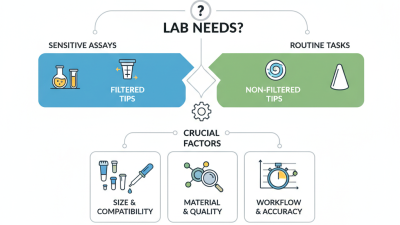
However, not all devices perform equally. Labs must carefully evaluate their needs and select appropriate technologies. Some liquid handling systems may require significant investment and specialized training. Failure to choose the right device can compromise experiment quality. As laboratories continue to evolve, the role of liquid handling devices must be reassessed regularly, ensuring they meet the dynamic demands of research environments.
The Importance of Precision in Laboratory Workflows
Precision is vital in laboratory workflows. Accurate liquid handling ensures reliable results in experiments. According to a report by the National Institute of Standards and Technology, even small errors can lead to significant discrepancies. For instance, a 1% variance in volume can impact drug formulation. This is why liquid handling devices are essential.
Improper liquid handling can result in wasted resources and time. A study published in the journal Lab on a Chip revealed that approximately 30% of laboratory time is spent on manual pipetting. This inefficiency not only slows progress but also increases the risk of contamination. Automation helps eliminate human error, enhancing the reliability of experimental outcomes.
Tip: Always calibrate your liquid handling devices regularly. This will ensure accuracy in dispensing volumes.
Training staff on proper techniques is equally important. Standard operating procedures should be established and reviewed periodically.
Tip: Consider using visual aids in the lab to remind staff of best practices. This can reduce errors and improve overall efficiency.
Types of Liquid Handling Devices and Their Applications
Liquid handling devices are pivotal in modern laboratories. They streamline processes and enhance accuracy. These devices come in various types, each designed for specific needs.
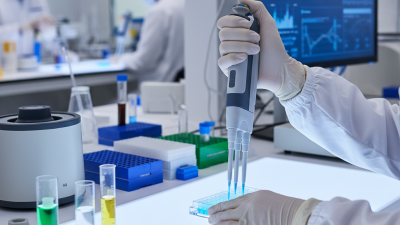
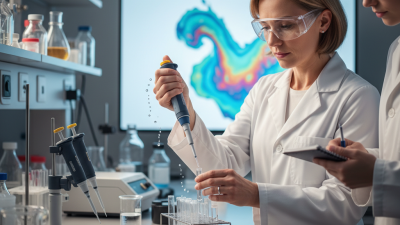
Pipettes are common tools. They allow for precise measurement and transfer of liquids. Various types of pipettes exist, including manual and electronic versions. Manual pipettes require skill and practice. Electronic ones offer more ease and consistency. Both types are used in research, clinical, and educational settings.
Another essential device is the multi-channel pipette. This tool can transfer multiple samples simultaneously. It is effective for high-throughput applications. Liquid dispensers also play a role. They ensure that reagents are added uniformly in experiments. Despite their advantages, some users struggle with calibration. Regular maintenance is crucial for all liquid handling devices to ensure their reliability.
Automation in Liquid Handling: Benefits and Trends
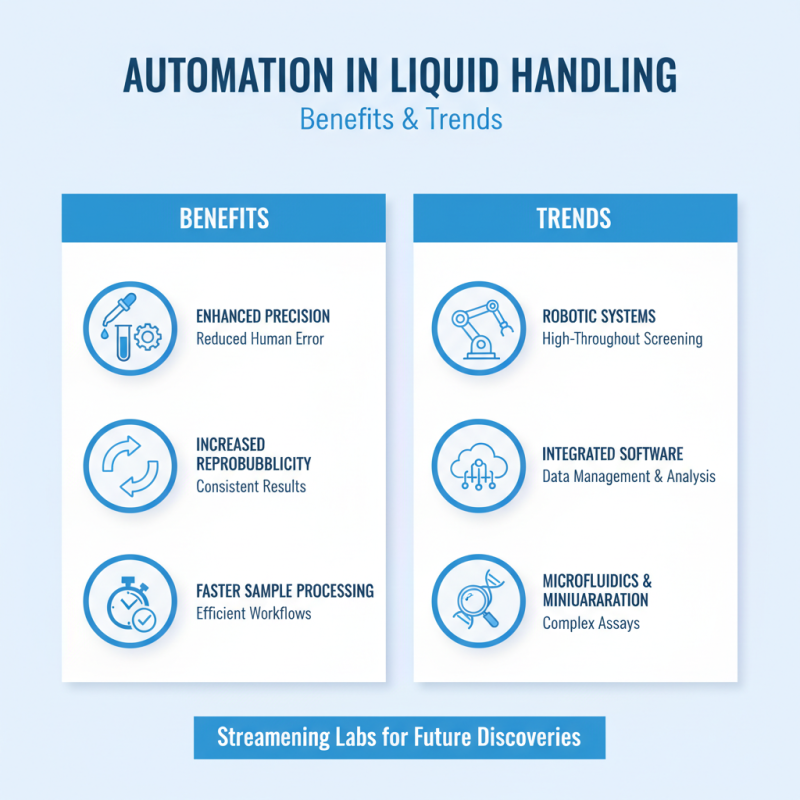
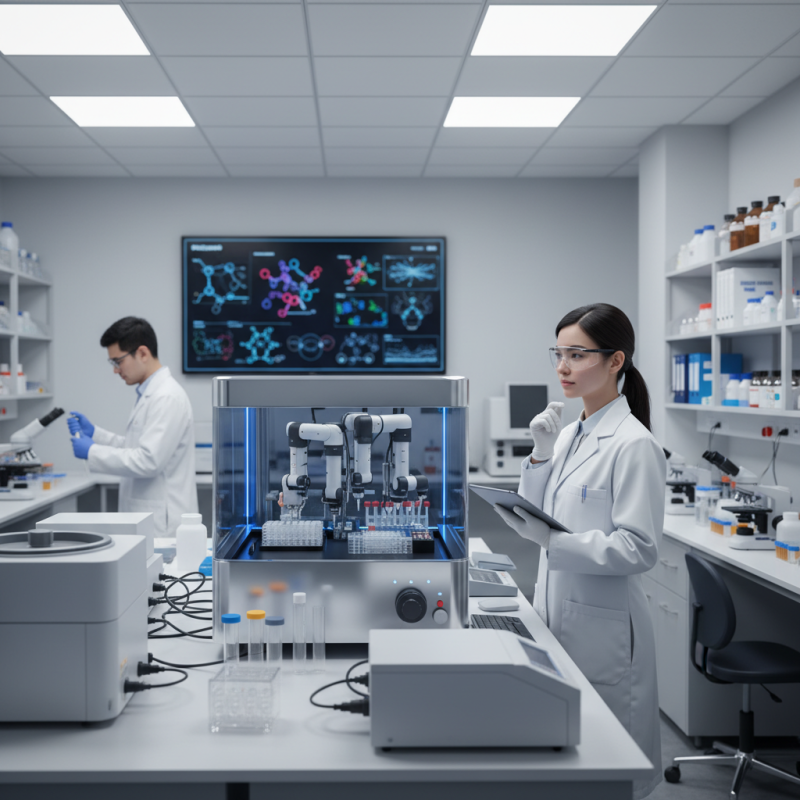
Automation in liquid handling has transformed how laboratories operate. This technology streamlines processes such as sample preparation, reagent mixing, and liquid transfers. Enhanced precision reduces human error and increases reproducibility. Laboratories can now manage complex workflows efficiently, leading to faster results.
Adopting automated liquid handling systems offers several benefits. They save time, allowing researchers to focus on analysis rather than repetitive tasks. However, implementing such systems requires careful planning. Workflow integration can present challenges. Staff training is essential to maximize efficiency and minimize disruptions.
Trends indicate a growing reliance on smart technology within liquid handling. Robotics and AI integration are on the rise. While these advancements enhance data handling, concerns about over-reliance exist. Laboratories must balance automation with human oversight to maintain quality and adaptability. Each lab's needs vary, prompting reflection on the best approach for each unique environment.
Challenges in Liquid Handling: Accuracy and Contamination Risks
Liquid handling in laboratories poses significant challenges, particularly concerning accuracy and contamination risks. Precision is essential when measuring liquids. A slight error can lead to disastrous results in experiments. For example, a pipette used to transfer a small volume might inaccurately dispense due to calibration issues. This could ultimately skew results and compromise research integrity.
Contamination is another pressing concern. Even trace amounts of undesired substances can alter experimental outcomes. Lab environments often contain numerous variables that contribute to this risk. Reagents and samples may interact unexpectedly, leading to compromised results. Inadequate cleaning of equipment can also introduce foreign elements. Using liquid handling devices that minimize these risks is crucial for reliable data. Techniques such as proper rinsing and using disposable tips can help mitigate contamination but still require vigilance.
It's clear that maintaining accuracy in liquid handling is not just about tech; it’s about practice and attention to detail. Technicians must remain conscientious. Training on proper usage and careful monitoring of equipment are essential. A consistent approach is necessary, yet human error can still affect overall outcomes. Reflection on these practices is vital to improve and ensure the reliability of laboratory research.
Future Innovations in Liquid Handling Technologies for Laboratories
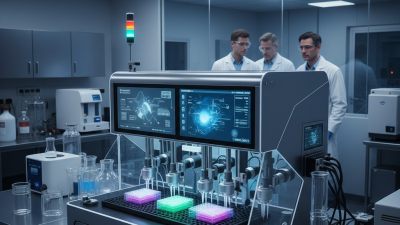
Innovations in liquid handling technologies are reshaping modern laboratories. These devices are key in increasing efficiency and accuracy. With the rise of automation, robotic liquid handlers are gaining ground. They minimize human error and ensure precise measurements. This allows scientists to focus on more complex tasks.
Future advancements promise even more. Smart liquid handling devices are emerging, featuring AI integration. These intelligent systems can adapt to different liquids and experimental conditions. Imagine a device that learns from past experiments to optimize future ones. However, the complexity poses challenges; reliance on technology could limit fundamental skills in lab personnel.
Developing more sustainable options is also on the horizon. Eco-friendly materials are being researched to reduce waste in labs. Liquid handling systems need to consider environmental impact. As the industry evolves, balancing innovation with ethical practices is crucial. This delicate interplay will define the future of laboratory liquid handling technologies.