
What Are the Top Laboratory Pipettes for Global Buyers?
Choosing the right laboratory pipette is a practical decision for laboratories buying across borders. Global buyers must compare accuracy, ergonomics, durability, service access, and calibration support. A low purchase price can become expensive when seals fail, tips fit poorly, or local maintenance is unavailable.
Dr. Andrew J. V. Smith, a liquid-handling validation specialist, has said, “A pipette is only as reliable as the technique surrounding it.” This principle remains important when comparing air-displacement, positive-displacement, manual, and electronic models. The best choice depends on liquid viscosity, dispensing volume, workload, and operator habits. A researcher handling 2 microliters needs different control from one transferring 10 milliliters repeatedly. Small details matter. Finger fatigue matters.
This guide examines leading laboratory pipette options for international purchasers. It considers documented performance, ISO 8655 alignment, calibration intervals, tip compatibility, and regional technical support. It also looks at real working conditions, such as cold rooms, crowded benches, and long pipetting sessions. Product brochures often emphasize impressive specifications. They may not explain how those specifications perform after months of daily use. That gap deserves attention.
No single pipette suits every laboratory. Even experienced buyers can overvalue precision while overlooking repair logistics or training requirements. Therefore, this comparison uses a balanced view of performance, ownership cost, usability, and supplier reliability. The goal is not to name one universal winner. It is to help buyers choose equipment that remains dependable when experiments become repetitive, urgent, and less than perfect.
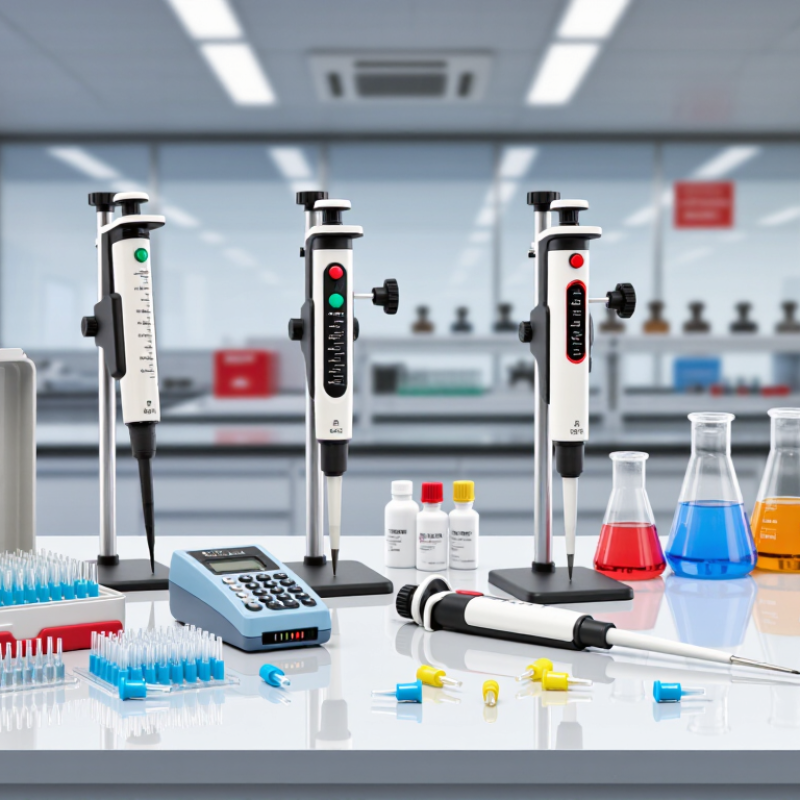
Laboratory Pipette Types and Their Core Functions
What Are the Top Laboratory Pipettes for Global Buyers?
Laboratory pipettes differ by volume range, control method, and application. Air-displacement pipettes suit routine aqueous samples, such as buffers and prepared solutions. Positive-displacement pipettes handle viscous, volatile, or foaming liquids more reliably. Their piston contacts the liquid directly, reducing vapor-related measurement errors.
Single-channel pipettes support individual tubes and wells. Multichannel models transfer several samples simultaneously across microplates. Electronic pipettes can improve consistency during repetitive work, while mechanical pipettes remain practical for basic laboratories. Adjustable-volume pipettes offer flexibility, but fixed-volume models may provide better repeatability for repeated assays. Accuracy still depends on correct technique, not only instrument design.
Tips: Select a volume range that keeps the target volume near the middle. Use compatible tips with a firm seal. Pre-wet the tip when handling small volumes. Keep the pipette vertical during aspiration. Change tips between samples to reduce carryover. Calibration should follow local procedures and the liquid’s properties.
Global buyers should check operating temperature, service access, documentation, and user training. A pipette designed for cold-room work may behave differently in a warm laboratory. That detail is easy to overlook. Regular inspection can reveal loose cones, stiff plungers, or damaged seals before results drift. In practice, even skilled users make mistakes when rushing. Slow, consistent thumb pressure often matters more than expected.
| Laboratory Pipette Type | Typical Volume Range | Operating Principle | Core Function | Key Strengths | Common Applications | Important Selection Considerations |
|---|---|---|---|---|---|---|
| Air-Displacement Micropipette | 0.1–1,000 µL | An air cushion separates the piston from the liquid. The piston movement aspirates and dispenses the selected volume. | Accurate transfer of small liquid volumes in routine laboratory work. | Versatile Easy to use Wide tip availability | Sample preparation, molecular biology, cell biology, analytical testing and general research. | Performance can be affected by liquid temperature, viscosity, volatility, immersion depth and dispensing technique. |
| Positive-Displacement Micropipette | Approximately 0.1–1,000 µL | A disposable piston moves directly in contact with the liquid, eliminating the air cushion. | Reliable transfer of liquids that are volatile, viscous, dense, foaming or prone to evaporation. | Low evaporation effect Good for difficult liquids Reduced aerosol risk | Organic solvents, concentrated reagents, oils, glycerol-rich solutions and clinical or diagnostic samples. | Disposable piston tips are required, and operating costs may be higher than for standard air-displacement models. |
| Single-Channel Adjustable Micropipette | Commonly 0.1–10, 2–20, 20–200 and 100–1,000 µL | A manually or electronically controlled piston aspirates and dispenses one liquid volume at a time. | Flexible, precise liquid handling across multiple small-volume ranges. | Flexible volume setting Broad usability Suitable for varied workflows | Reagent addition, serial dilution, aliquoting, PCR setup and analytical sample handling. | Select a volume range in which the target volume is not near the extreme limit for better accuracy and precision. |
| Multichannel Micropipette | Commonly 0.5–300 µL per channel | Multiple pistons or linked dispensing channels transfer the same volume simultaneously. | Rapid parallel transfer into multiwell plates and other repeated-format vessels. | High throughput Consistent plate filling Lower repetitive workload | Microplate assays, ELISA, PCR and qPCR preparation, screening and serial dilution. | Check channel count, well spacing, tip compatibility, plate access and the force required for tip attachment and ejection. |
| Electronic Micropipette | Commonly 0.5–1,200 µL | A motor-driven piston controls aspiration and dispensing according to a programmed setting. | Standardized and repeatable pipetting with programmable modes. | Reduced thumb fatigue Programmable operation Repeatable speed control | High-volume workflows, repetitive dispensing, serial dilution and plate-based applications. | Battery life, charging requirements, electronic controls, calibration procedures and compatibility with the intended tip system should be evaluated. |
| Repeating or Stepper Pipette | Typically 10 µL to 50 mL, depending on the dispenser system | A filling mechanism delivers multiple equal aliquots from one aspiration. | Fast repeated dispensing of the same volume into many containers. | Efficient aliquoting Fewer refill cycles Good for repetitive work | Reagent distribution, microplate loading, tube filling and routine batch preparation. | Confirm the minimum and maximum dispensing volume, residual volume, tip or syringe format and liquid compatibility. |
| Serological Pipette | Commonly 1–50 mL | A graduated, usually disposable pipette is operated with a pipette controller for controlled liquid transfer. | Measuring and transferring milliliter-scale liquid volumes. | Large-volume handling Graduated scale Suitable for sterile work | Cell culture, media preparation, buffer transfer and general biological laboratory work. | Check sterile or non-sterile status, graduation accuracy, calibrated “to deliver” specification and compatibility with the controller. |
| Volumetric Pipette | Commonly 1–100 mL | A calibrated glass or plastic vessel is designed to contain or deliver one specified volume. | Preparation and transfer of solutions at a highly defined nominal volume. | High volumetric accuracy Excellent repeatability Useful for standards | Standard solution preparation, quantitative analysis and dilution procedures requiring a fixed volume. | It is intended for one nominal volume rather than a continuously adjustable range; temperature and reading technique affect results. |
| Pasteur or Transfer Pipette | Typically below 1 mL to approximately 10 mL | A simple disposable or reusable transfer device moves liquid without providing precision volumetric measurement. | Convenient non-quantitative transfer and dropwise addition. | Low cost Simple operation Useful for decanting | Adding reagents, moving supernatants, transferring stains and handling low-risk non-critical liquids. | Do not use when calibrated accuracy or high precision is required; choose material according to chemical compatibility. |
Related Posts
-

How to Choose the Right Laboratory Pipette for Your Needs?
-
Best Lab Pipette Options for Accurate Measurement?
-
2026 How to Choose the Right Lab Pipette for Your Needs?
-
What is a Scientific Pipette and How is it Used?
-
2026 Top Pipette Lab Equipment Innovations and Trends?
-
10 Essential Tips for Mastering Repetitive Pipette Techniques