What is Pipette Science and How Does It Work?
Pipette science plays a crucial role in laboratory settings. It involves precise liquid transfer, essential for experiments. According to a report by MarketsandMarkets, the global pipette market is projected to reach $1.1 billion by 2025. Researchers depend on pipettes for accuracy in their work. The average error rate in pipetting can affect results significantly.
The importance of mastering pipette techniques cannot be overstated. A 2022 study highlighted that 64% of lab errors stem from improper pipetting. This statistic underlines the need for proper training in pipette science. Many labs invest in advanced pipetting systems, yet basic skills remain vital.
While technology advances, the human element in pipette science must not be neglected. The tactile skill of pipetting cannot be replicated by machines. Yet, many researchers overlook this aspect, leading to inconsistent results. Reflections on pipetting methods and skill development are essential for continual improvement in scientific work.
Understanding the Basics of Pipette Science
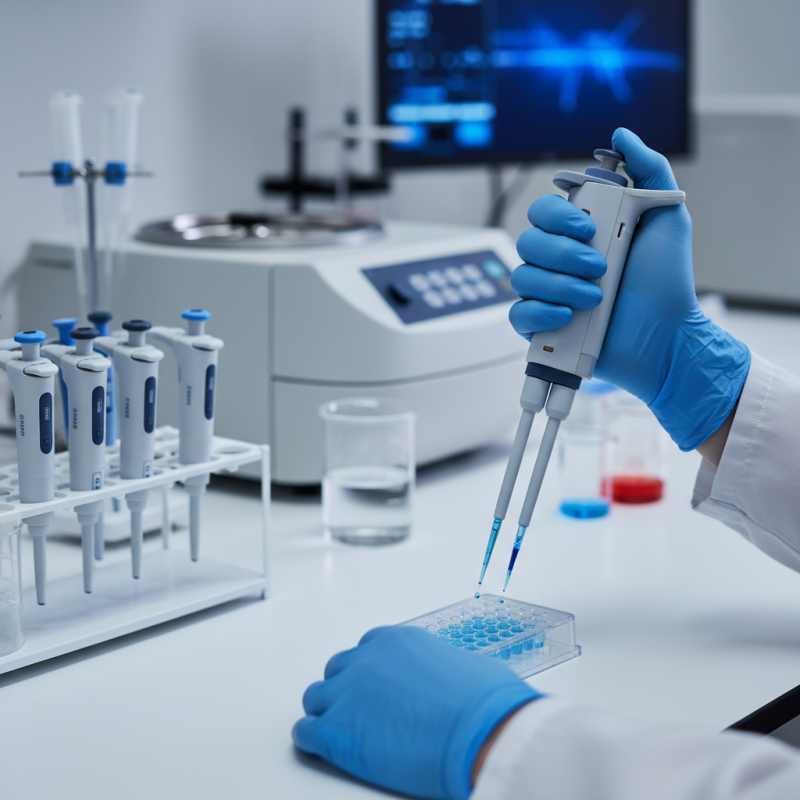
Pipette science is crucial for various fields, including biology and chemistry. It involves precise measuring and transferring of liquids. A recent study highlighted that inaccurate pipetting can lead to significant experimental errors. Up to 10% of results can be skewed due to improper technique.
Correct pipette usage requires a steady hand and attention to details. Using the right pipette for the task is essential. For instance, air displacement pipettes are popular for measuring small volumes. However, many lab technicians overlook maintenance. Regular calibration is often neglected. This oversight can affect accuracy, sometimes by as much as 15%.
There’s a need for better training in pipetting techniques. A survey found that nearly 40% of lab personnel felt unprepared. Understanding fluid dynamics plays a key role. Each liquid behaves differently; viscosity changes how it flows. In practice, scientists must constantly adapt. Awareness of these factors can enhance results but is often underestimated.
Pipette Science: Volume Distribution Analysis
How Pipettes Function: The Science Behind Liquid Dispensing
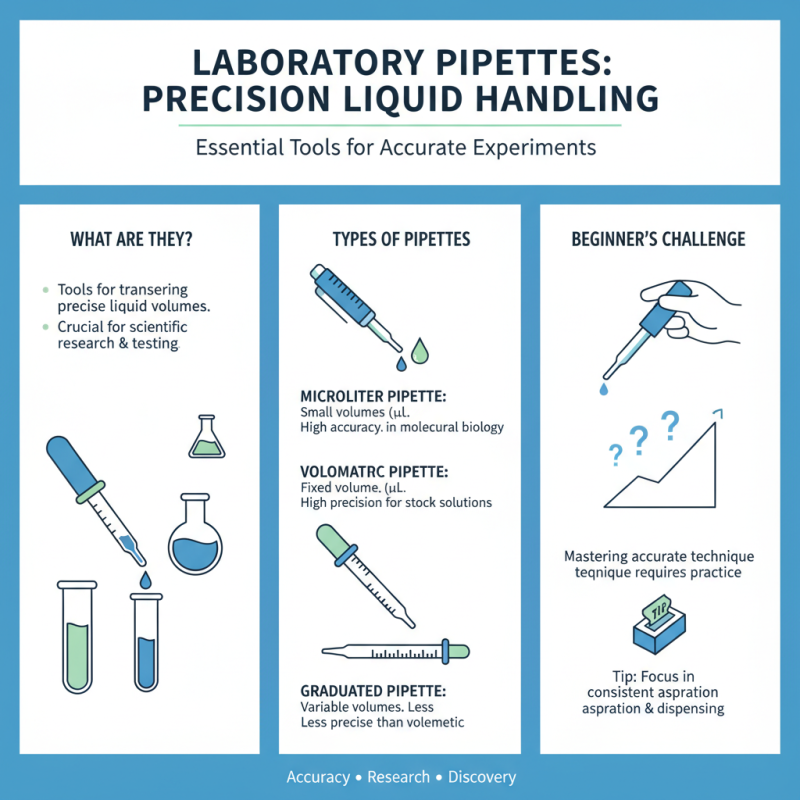
Pipettes play a vital role in laboratory settings, ensuring accurate liquid dispensing. These essential tools utilize the principle of air displacement. When the plunger is pressed and released, a specific volume of liquid is drawn into the pipette tip. This mechanism is not just simple; it’s based on fundamental scientific principles. According to industry reports, pipettes can achieve an accuracy level of up to 0.1% for precise liquid handling.
The types of pipettes vary widely, including single-channel and multi-channel options. Multi-channel pipettes are especially handy for high-throughput tasks. However, users must regularly calibrate their tools. A study found that nearly 20% of pipettes in labs are out of specifications. This oversight can lead to significant errors in experiments, potentially skewing results. It emphasizes the need for regular maintenance and checks. Awkward techniques, like improper gripping or varying plunger speed, can also contribute to inaccuracies.
While pipettes are generally reliable, user technique matters greatly. Several researchers report variations in liquid handling due to the operator's experience. For example, liquid retention can occur if the pipette tip is not immersed at the proper depth. The intricacies of pipette operation remind us that even a small oversight can impact research outcomes countlessly. Understanding these functions is essential for any lab environment aiming for precision.
Techniques for Accurate Pipetting in Laboratory Settings
Accurate pipetting is a cornerstone of successful laboratory experiments. Precision is vital in fields like biochemistry and molecular biology. Even a slight deviation can alter experimental results, leading to potentially misleading conclusions. According to a report by the American Society for Microbiology, accuracy in liquid handling can influence outcomes in up to 60% of lab experiments.
One key technique involves selecting the right pipette size for the sample volume. The volume of liquid should ideally be between 10% and 100% of the pipette's capacity. Using a pipette outside this range can result in errors. A study noted that using the right pipette size can improve accuracy by 20%.
Tips: Regularly calibrate your pipettes. This enhances reliability and assures that results are valid. Also, practice consistent technique. Hold the pipette vertically to maintain balance. It may sound simple, but many overlook this. Consistent practice can reduce errors significantly.
Practice makes perfect, but not all lab personnel realize this. Frequent errors can stem from improper techniques. Even experienced users might hesitate to ask for feedback. Continuous learning is essential for everyone involved.
Common Applications of Pipette Science in Research and Industry
Pipette science plays a crucial role in both research and industry. In laboratories, precision is key. Scientists use pipettes to transfer specific volumes of liquids. This ensures consistency in experiments. Applications range from biological research to drug development. In these settings, accurate measurements are essential. Even a slight error can lead to unreliable results.
In industry, pipettes are used for quality control and product formulation. They help ensure that products meet strict standards. Food and beverage companies often rely on pipette science to maintain consistency. However, there are challenges. Users must be trained to handle pipettes properly. Misuse can cause contamination or inaccurate measurements. This highlights the need for attention to detail.
Moreover, in educational settings, pipette science is used to teach fundamental laboratory skills. Students learn the importance of accuracy. They practice measuring liquids, observing how precision affects outcomes. Mistakes are part of the learning process. Each misstep provides a valuable lesson in measurement and technique. Such hands-on experience builds confidence and competence.
What is Pipette Science and How Does It Work? - Common Applications of Pipette Science in Research and Industry
| Application Area |
Description |
Typical Volume Range |
Common Equipment |
| Molecular Biology |
Used for transferring small volumes of DNA, RNA, and reagents in experiments. |
1 µL - 100 µL |
Micropipettes |
| Clinical Laboratories |
Critical for sample preparation and fluid handling in diagnostic tests. |
10 µL - 1 mL |
Automated pipettors |
| Pharmaceutical Research |
Essential for formulation development and analytical assays. |
5 µL - 500 µL |
Adjustable pipettes |
| Food and Beverage Testing |
Used in sensory testing and chemical analysis of food samples. |
50 µL - 10 mL |
Autopipettes |
| Environmental Monitoring |
For sampling water and soil for contaminant analysis. |
100 µL - 5 mL |
Electronic pipettes |