How to Improve Laboratory Efficiency with Liquid Handling Robotics?
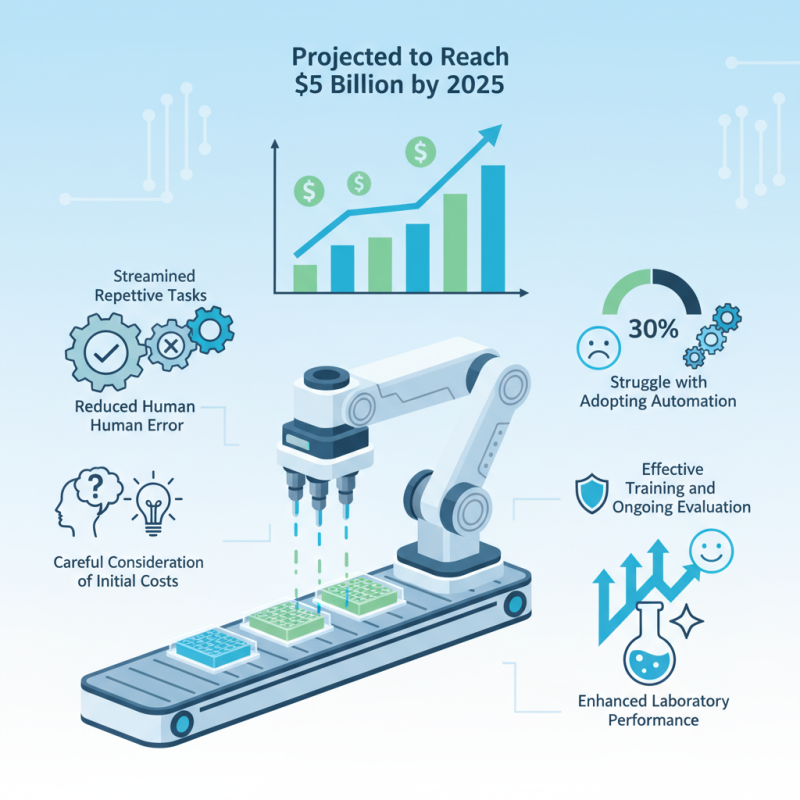
Laboratories today face increasing pressure to enhance efficiency and productivity. According to a recent report by MarketsandMarkets, the liquid handling robotics market is projected to reach $5 billion by 2025. This growth is driven by the rising demand for automation in research and diagnostics. Liquid handling robotics can streamline repetitive tasks, reducing human error and ensuring accuracy.
However, while these systems offer significant benefits, they are not a one-size-fits-all solution. Implementing liquid handling robotics requires careful consideration of workflow integration and initial costs. A study by Frost & Sullivan highlights that 30% of laboratories struggle with adopting automation effectively. This prompts reflection on the balance between investment and operational efficiency.
Moreover, optimizing the use of liquid handling robotics is crucial. Labs must continually assess their processes and adapt as needed. Some users report that without proper training, staff can misoperate these systems, leading to errors. Ensuring effective training and ongoing evaluation can help maximize the advantages of liquid handling robotics, further enhancing laboratory performance.
Advantages of Liquid Handling Robotics in Laboratories
Liquid handling robotics are transforming laboratory work. Their precision minimizes human error in liquid measurements. These systems can handle various liquids without contamination. Such accuracy is essential for reproducible results. Traditional methods often rely on manual pipetting. However, this can lead to variability. Even slight inconsistencies can affect experiments.
The efficiency of these robots allows for more samples to be processed in less time. They operate continuously, reducing the need for breaks. Labs can increase throughput significantly. Automation also frees scientists from repetitive tasks. Yet, integration can be challenging. Training staff to operate complex systems takes time. There can be a learning curve to address.
Furthermore, while these robots enhance accuracy, they are not infallible. Calibration must be monitored regularly. Over time, wear and tear can affect performance. Labs should reflect on their specific needs before investing. Relying solely on automation might not be ideal for all research. Balancing advanced technology with human insight is vital for progress.
Key Features to Look for in Liquid Handling Robots
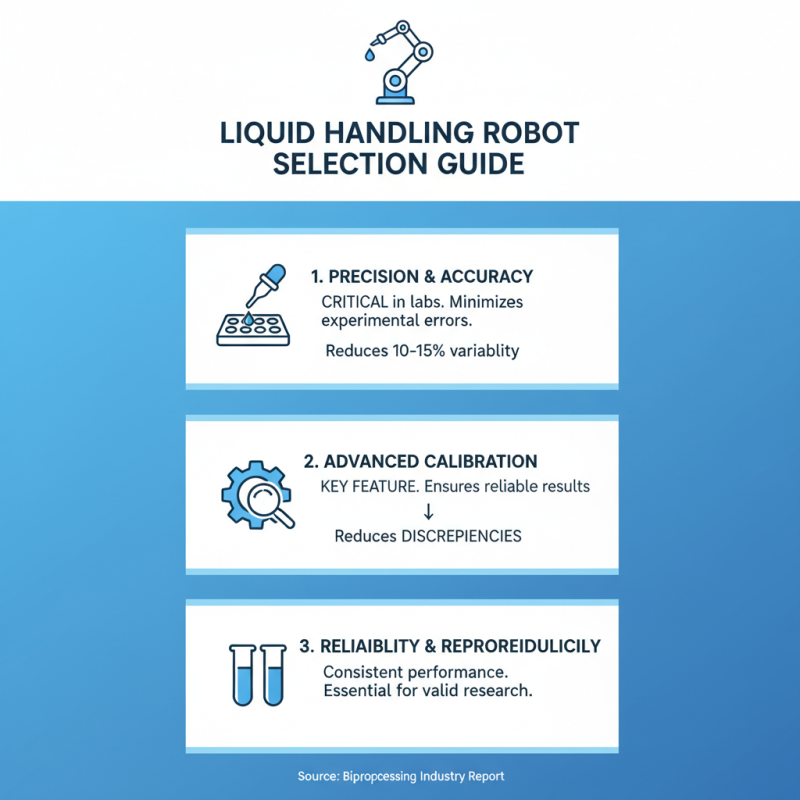
When selecting liquid handling robots, there are key features to consider. Precision and accuracy are paramount in laboratory environments. According to a report by the Bioprocessing Industry, variability in pipetting can lead to a 10-15% margin of error in experiments. Look for robots with advanced calibration features to minimize these discrepancies.
Speed is another critical factor. Laboratories often face tight deadlines. A study from the International Journal of Automation found that automating liquid handling tasks can increase throughput by up to 40%. Speed allows researchers to focus on analysis rather than repetitive pipetting tasks. However, it's essential to balance speed with accuracy to avoid errors.
Integration capabilities also play a significant role. Robots should easily fit into existing workflows. Compatibility with various laboratory equipment can streamline processes. Failures in integration can lead to downtime and frustration. Therefore, selecting a robot that offers user-friendly software and support is crucial for effective operation. In a fast-moving lab, even one hiccup can disrupt productivity completely.
Best Practices for Implementing Liquid Handling Solutions
Implementing liquid handling solutions can transform laboratory efficiency. Start by assessing your current workflows. Identify bottlenecks. Observe how manual handling slows processes. This will guide your decision on automation needs.
Training staff is crucial. They must understand both the robots and the protocols. Often, lack of knowledge leads to errors. A simple mistake in liquid handling can ruin experiments. Ensure clear operating instructions are available. Regular training sessions can reinforce good practices and correct bad habits.
Integration of these systems should be gradual. Overhauling everything at once can cause chaos. Instead, test one liquid handling robot within a specific process first. Monitor the results closely. Be patient and open to making adjustments. Efficiency gains will come with time and experience. Frequent reviews help identify ongoing challenges. Everyone should be encouraged to share insights to improve the system continuously.
How to Improve Laboratory Efficiency with Liquid Handling Robotics? - Best Practices for Implementing Liquid Handling Solutions
| Parameter |
Description |
Best Practice |
Impact on Efficiency |
| Throughput |
Amount of samples processed in a given time |
Optimize robot speed and cycle times |
Increased sample handling capability |
| Accuracy |
Precision of liquid transfers |
Regular calibration and maintenance |
Reduced error rates in results |
| Usability |
Ease of use for lab personnel |
Provide comprehensive training |
Faster adoption and use of technology |
| Automation Level |
Degree of process automation |
Implement end-to-end automated workflows |
Minimized manual intervention |
| Data Management |
Handling and archiving of experimental data |
Use integrated software solutions |
Improved data reliability and accessibility |
Common Challenges in Laboratory Robotics and How to Overcome Them
Laboratory robotics can streamline workflows, but challenges exist. One major issue is the integration of new systems into existing setups. Researchers often encounter software compatibility problems. This can lead to frustration. Finding seamless integration can consume valuable time. It’s crucial to evaluate compatibility beforehand. Understanding your lab’s needs is key.
Another challenge is user training. Many staff members may struggle with new technology. If users are not properly trained, mistakes can happen. Mismanaged liquid handling can result in errors that affect experiments. Regular training sessions can help ease this transition. Creating a supportive learning environment fosters confidence.
Technical malfunctions also present a significant hurdle. Breakdowns can halt progress. Maintaining equipment regularly is essential. Establishing a maintenance schedule can prevent unexpected issues. Having backup plans allows for flexibility when problems arise. Reflection on past experiences is valuable for future improvements. These steps can ultimately increase laboratory efficiency.
Laboratory Efficiency Improvement with Liquid Handling Robotics
This chart illustrates the common challenges faced in laboratory settings before and after implementing liquid handling robotics, highlighting the improvements in efficiency.
Future Trends in Liquid Handling Technology for Enhanced Efficiency
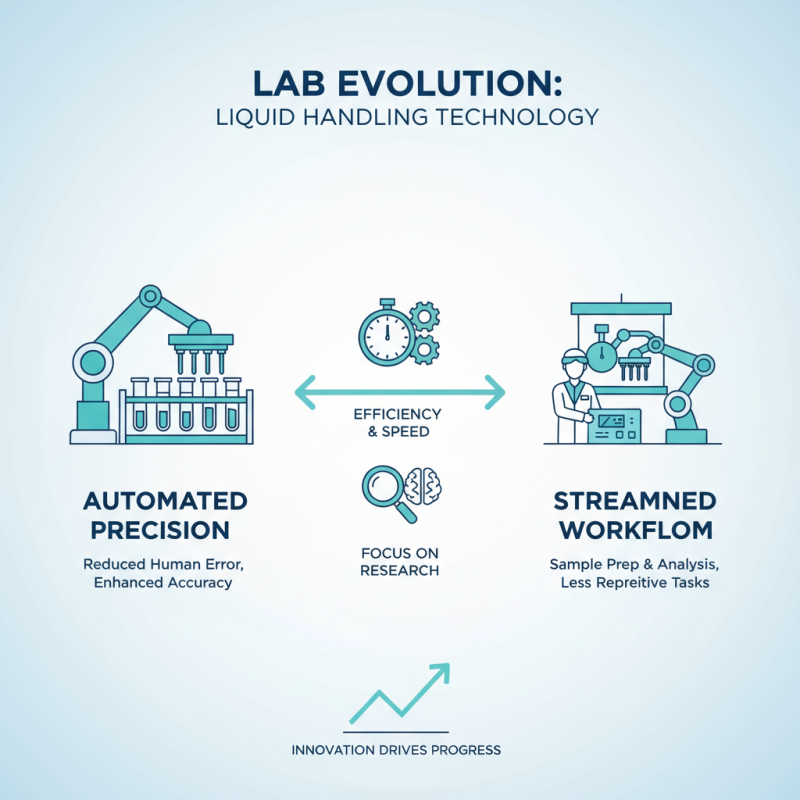
The landscape of liquid handling technology is rapidly evolving. Innovations aim to enhance efficiency and accuracy in laboratory settings. Automated liquid handlers can significantly cut down on human error. These machines streamline the process of sample preparation and analysis. Imagine a lab where repetitive tasks are handled with precision. This reduces the workload on scientists, allowing for more focus on critical research.
The future of this technology is exciting, yet there are challenges. Integration of advanced robotics is not without its hurdles. Lab personnel may need extensive training to operate new systems effectively. There can be resistance to change, as some staff prefer traditional methods. Moreover, the initial investment costs might deter many facilities from upgrading.
Robust data management systems are essential for the seamless operation of new liquid handling robots. These systems ensure that data integrity remains intact throughout experiments. As we adopt these changes, ongoing reflection on efficiency gains versus user comfort is vital. Balancing technology and human touch will be crucial for maximizing laboratory potential.