2026 How to Choose the Best LTS Pipette Tips for Your Lab Needs?
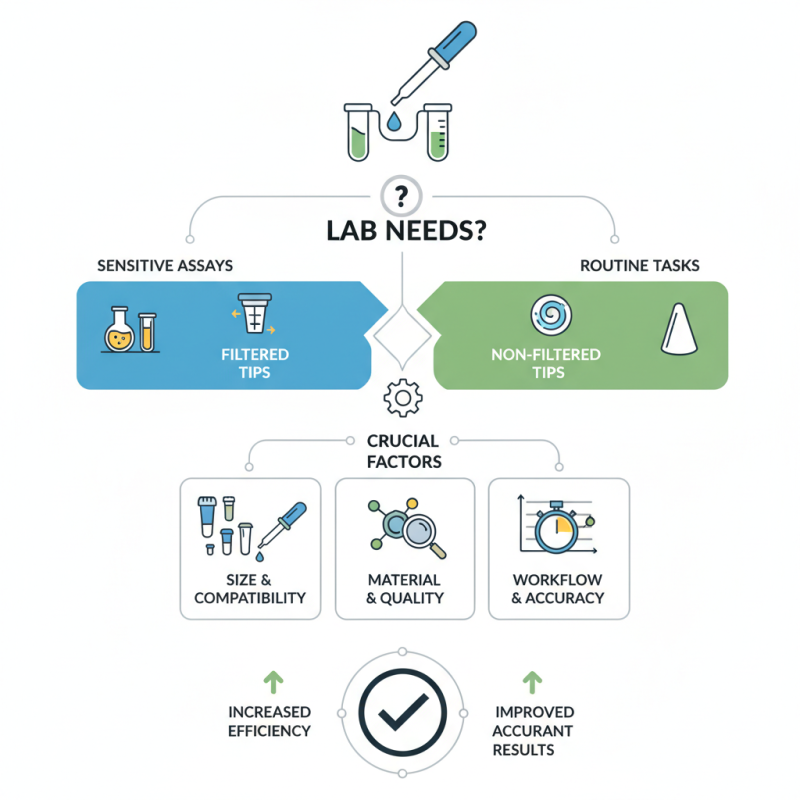
Choosing the right LTS pipette tips can significantly impact your lab's efficiency and accuracy. With so many options available, it can be overwhelming. Factors such as size, material, and compatibility with pipettes play a crucial role in decision-making. Understanding your specific needs is essential.
LTS pipette tips come in multiple designs, including filtered and non-filtered. Filtered tips prevent contamination and are ideal for sensitive assays. Non-filtered options may suffice for routine tasks. However, many labs overlook the importance of quality and fit. Subpar tips can lead to inconsistent results and wasted resources.
Reflect on your current lab practices. Are you getting the most out of your pipette tips? Investing time in research can save you long-term. Consider how different types affect your workflows and overall results. The right LTS pipette tips can enhance your effectiveness and accuracy in the lab.
Understanding LTS Pipette Tips: A Comprehensive Overview
When selecting LTS pipette tips, understanding their design is crucial. These tips come in various volumes, allowing precise liquid handling. Consider the volume range you need. A 10 µL tip differs significantly from a 1000 µL tip. Each size serves specific tasks, impacting efficiency and accuracy.
Another important aspect is the fit with pipettes. Not all tips fit all pipettes securely. An ill-fitting tip can lead to contamination or evaporation losses. It's essential to verify compatibility before purchase. Some labs even perform a quality check for each batch received.
Moreover, consider the material used for the tips. They can be made of plastic or other polymers. Some labs may prefer nonsterile tips for certain applications. Others may prioritize sterility for sensitive experiments. Reflecting on your lab's specific needs is vital for making the right choice. Time spent on proper selection can save costly mistakes later on.
2026 How to Choose the Best LTS Pipette Tips for Your Lab Needs?
| Tip Size (µL) |
Material |
Sterility |
Packaging Type |
Features |
| 10 |
Polypropylene |
Non-Sterile |
Bulk |
Easily removable, graduated |
| 20 |
Polyethylene |
Sterile |
Rack |
Low retention, high clarity |
| 200 |
Polypropylene |
Non-Sterile |
Box |
Color-coded, non-drip |
| 1000 |
Polyethylene |
Sterile |
Bulk |
Filtered, high precision |
| 5000 |
Polypropylene |
Non-Sterile |
Box |
Low retention, wide mouth |
Key Factors to Consider When Choosing LTS Pipette Tips
Choosing the right LTS pipette tips is crucial for reliable lab work. One key factor is the volume compatibility. Tips need to match the pipette's range. Over 70% of pipetting errors arise from improper tip selection or fit. This can lead to inconsistent results and wasted resources.
Another important factor is the material of the tips. Most pipette tips are made from high-quality polypropylene. However, different applications may require specific materials. For instance, certain biological samples might need low-binding tips to reduce sample loss. About 40% of lab technicians report that using the wrong material can contaminate samples, affecting outcomes.
Ease of use is also essential. Tips should fit snugly on pipettes but be easy to eject. Ideally, tips offer a positive stop during pipetting for better precision. In a recent survey, 60% of users found that complicated design led to slower workflows. Conversely, a seamless pipetting experience aids in productivity and accuracy. Choosing the right tips is not just about functionality; it influences overall laboratory efficiency.
Types of LTS Pipette Tips and Their Applications
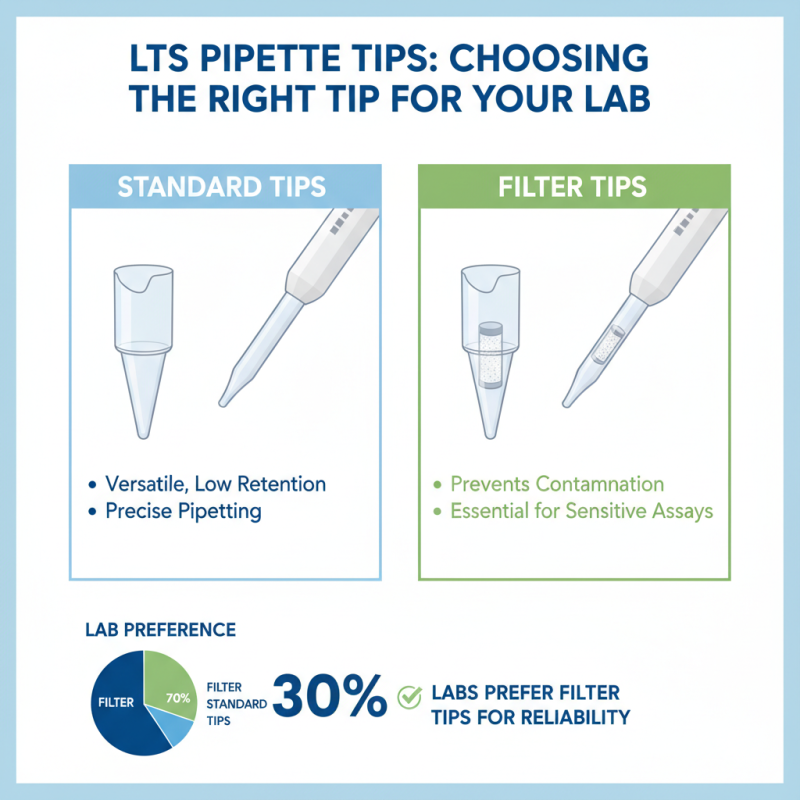
Choosing the right LTS (Low-Volume Transfer System) pipette tips is crucial for any lab's workflow. Different types of tips serve various applications. For example, standard tips are versatile and can handle a wide range of liquids. They typically have a low retention rate, which is ideal for precise pipetting. In contrast, filter tips are designed to prevent contamination and carryover, making them essential for sensitive assays. According to a market report, about 30% of labs prefer filter tips for their reliability.
Specialized tips also exist, such as wide-bore tips. These are useful for transferring viscous fluids, ensuring less shear force. The right choice can streamline experiments and reduce errors. However, many labs misuse tips. Using the wrong type can lead to inaccurate results. A study indicated that over 20% of pipetting errors came from inappropriate tip selection. It highlights the need for careful consideration.
Moreover, the variability in thermal expansion among different types can affect accuracy. Some tips may not fit all pipettes well, leading to air gaps. This can compromise results in precision-demanding experiments. Thus, it remains vital for labs to assess their specific needs and choose accordingly. Ignoring these factors may result in experimental failure and wasted resources.
Evaluating Compatibility with Pipette Models and Brands
When selecting LTS pipette tips, compatibility is crucial. Not all tips fit all pipette models. A study from the Journal of Lab Automation highlights that 30% of lab errors stem from using incompatible tips. This can lead to inaccurate volumes, affecting research outcomes.
Consider the dimensions and design of the tips. For instance, some tips have a unique shape that enhances liquid retention. Others might not seal correctly, causing leaks. A report from the American Society for Microbiology suggests that even 1% volume discrepancies can skew experimental results significantly.
It's also essential to test tips with your specific pipette brand. Variability exists even within the same sizes across different brands. A lab may find that some tips work well with one model but not another. Researchers need to document these findings to avoid future inconsistencies. This reflection is vital for maintaining experiment integrity and achieving reliable data.
2026 LTS Pipette Tips Compatibility Evaluation
Cost Considerations and Quality Assurance for LTS Pipette Tips
When selecting LTS pipette tips for laboratory use, cost and quality cannot be ignored. Many laboratories face budget constraints. According to a recent industry report, up to 30% of lab costs relate to consumables. Choosing cost-effective pipette tips can lead to significant savings. However, if the quality is compromised, it can impact the accuracy of experiments. Poor fit can lead to air leakage and inconsistent results.
One tip is to review the specifications and certifications of pipette tips. Some manufacturers provide batch-testing data to ensure quality standards. Look for tips that have been certified for RNase/DNase-free, endotoxin-free, or PCR-optimized use. This can prevent contamination and enhance experiment reliability.
Moreover, thought should be given to the material used. Generally, high-quality polypropylene is preferred for its durability. It’s essential to balance cost and reliability. Opting for cheaper options might save money upfront, but could result in high expenses later due to experiment failures. A comprehensive analysis of these factors will ultimately yield better lab results.