How to Choose the Right Liquid Handling System for Your Lab?
Choosing the right liquid handling system for your lab can significantly impact productivity and accuracy. According to a recent industry report by MarketsandMarkets, the liquid handling systems market is projected to reach $4.48 billion by 2027, driven by advancements in automation and increasing demand for precision in laboratories. This data highlights the importance of choosing the right equipment to meet the evolving needs of research and development.
Dr. Emily Carter, a leading expert in laboratory automation, emphasizes, "Selecting the appropriate liquid handling system is crucial for ensuring reliable results." Her statement resonates with labs struggling to streamline workflows while maintaining data integrity. The overwhelming variety of systems available can lead to confusion. Some laboratories may overlook specific needs in their search for the latest technology, resulting in inefficiencies.
Complexity can arise from understanding system functionalities. A well-suited liquid handling system tailors to workflow demands, yet many labs still grapple with making an informed choice. Disregarding unique laboratory environments and requirements often leads to hurdles that could have been avoided. Thus, careful consideration of both capabilities and limitations is essential for effective liquid handling solutions.
Understanding the Types of Liquid Handling Systems Available
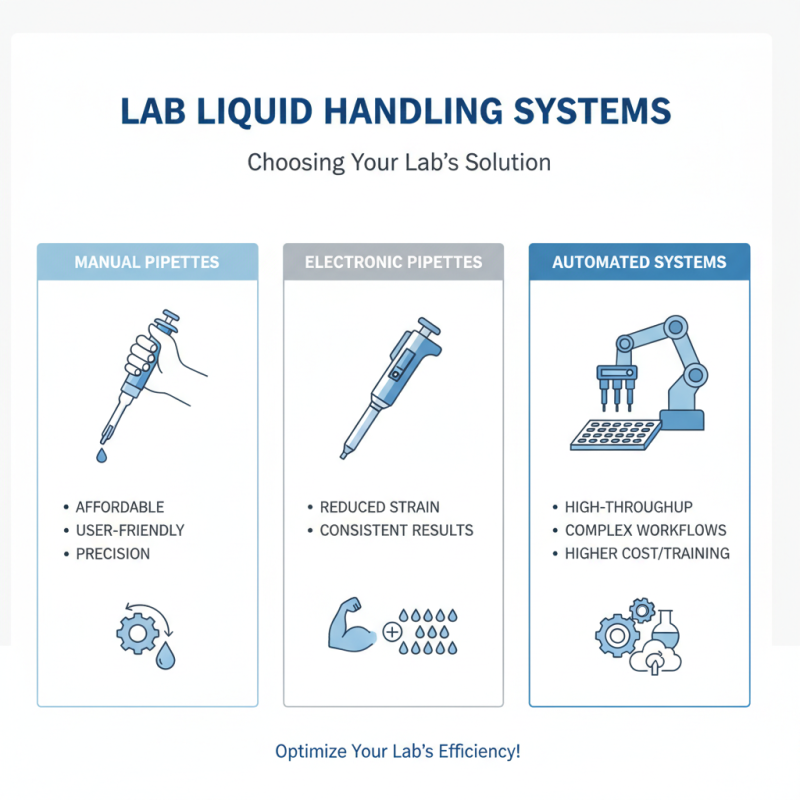
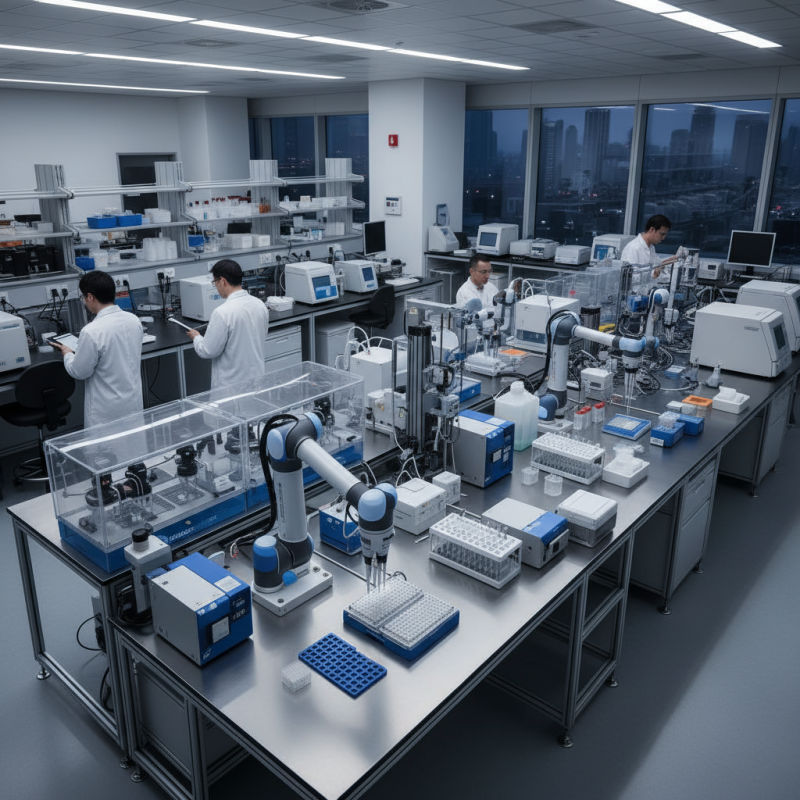
When choosing a liquid handling system for your lab, understanding the types available is crucial. There are mainly manual pipettes, electronic pipettes, and automated systems. Manual pipettes are user-friendly and affordable. They allow for precision but require more effort. Electronic pipettes reduce the risk of repetitive strain injuries. They provide consistent outcomes for repetitive tasks. Automated systems, on the other hand, are designed for high-throughput applications. They can handle complex workflows but come with a higher cost and require training.
**Tip:** Assess your lab's specific needs before investing. Consider the volume and type of liquids you'll work with. If you're dealing with viscous fluids, a more advanced system might be necessary.
While selecting a system, it’s important to ask questions. Are you scaling up your processes? Is your team comfortable with technology? These considerations impact your decision. Not all labs need the latest tech; sometimes simplicity is key. Regular calibration and maintenance are essential to ensure accuracy, regardless of the system you choose.
**Tip:** Don’t overlook the importance of user feedback. Getting input from your team can reveal practical insights on handling systems. It helps in making a well-rounded decision that reflects real lab dynamics.
Assessing Your Laboratory's Specific Liquid Handling Needs
When evaluating your laboratory's liquid handling needs, begin by assessing your workflow. Identify the types of samples you frequently handle. For example, do you work with volatile solvents or viscous liquids? Each type requires a specific approach to ensure accuracy and efficiency. According to a recent report by Lab Manager, approximately 40% of labs struggle with inefficient liquid handling processes. This inefficiency can lead to costly errors.
Next, consider the volume of liquids you regularly work with. If your lab processes large volumes, an automated system may be the solution. Research indicates that automated systems can improve throughput by 50% in high-volume labs. However, smaller labs may find manual systems more suitable for flexibility and cost. Weighted decisions based on your lab's size and the complexity of your tasks are crucial.
Evaluate your team's expertise as well. A complex automated system might require specialized training, which can slow down implementation. Approximately 60% of lab personnel reported difficulties adapting to new technology. Therefore, finding a balance between technology and user comfort is essential. Emphasizing team capabilities and specific needs can significantly impact your liquid handling efficiency.
Liquid Handling System Selection Criteria
Evaluating Key Features and Specifications of Liquid Handling Systems
Choosing the right liquid handling system can significantly impact lab efficiency. Evaluating key features is essential. Precision is paramount. Many systems claim accuracy, but data shows that only 70% meet industry standards consistently. This inconsistency can lead to errors in experiments, affecting outcomes and repeatability.
Consider the volume range of liquid handling systems. Systems need to handle a spectrum of volumes, from nanoliters to milliliters. A report highlighted that 80% of researchers frequently work with varying sample sizes. Choosing a system that can adapt is crucial for flexibility. Additionally, ease of use and ergonomics play roles in efficiency. Systems that are user-friendly can reduce training time by up to 50%.
Look into the automation capabilities as well. Automated systems can significantly cut down on human error. A study found that teams using automated systems improved throughput by 30%. However, high automation can lead to a lack of hands-on experience. Balancing automation with manual methods is vital. Consider the system’s integration with existing lab technology. Compatibility can be a challenge and requires careful planning.
How to Choose the Right Liquid Handling System for Your Lab?
| Feature |
Description |
Importance |
Considerations |
| Volume Range |
The spectrum of liquid volumes the system can handle. |
High |
Ensure it meets your experimental needs. |
| Precision |
Accuracy of liquid dispensation. |
High |
Critical for quantitative experiments. |
| Type of Liquid |
Nature of fluids (viscous, corrosive, etc.) the system can manage. |
Medium |
Select materials resistant to your samples. |
| Automation |
Level of automation available in the system. |
High |
Consider software compatibility. |
| Ergonomics |
User-friendly design for comfort and efficiency. |
Medium |
Important for frequent use. |
| Maintenance |
Frequency and complexity of maintenance tasks. |
High |
Choose systems with easy maintenance requirements. |
Considerations for Budget and Cost-Effectiveness in Selection
Choosing the right liquid handling system is essential for efficiency. Cost is often a primary concern. A tight budget shouldn't mean compromising quality. Assess the total cost of ownership, including maintenance and operation. This can make a significant difference over time.
When evaluating options, consider the features you need. Automated systems can save time but may come with higher upfront costs. Balance your needs with your budget carefully. For some labs, manual systems may be more cost-effective. They often require less initial investment and can still deliver reliable results.
Tip: Create a detailed budget plan. List out initial costs and projected expenses. This way, you can see where your funds are going.
Another factor is training costs. Some advanced systems require extensive training. Factor this into your budget. A system might seem cheap, but training expenses can add up quickly.
Tip: Consult your team about specific needs. Their insight can guide you toward the best choice. It’s crucial to involve everyone early on. Reflect on feedback to refine your selection process.