How to Choose the Right Liquid Handling Devices for Your Laboratory Needs?
In today's laboratories, selecting the right liquid handling devices is crucial for efficiency and accuracy. Industry reports indicate that approximately 70% of laboratory errors stem from improper liquid handling. This statistic underscores the importance of choosing devices that fit specific needs. The market for liquid handling devices is projected to grow significantly, reaching over $4 billion by 2025.
When choosing liquid handling devices, consider factors like precision, volume capacity, and compatibility with various liquids. Misjudgments can lead to costly errors and wasted resources. A common oversight is undervaluing the importance of device calibration, which directly impacts experimental outcomes.
Moreover, the diverse range of available devices can be overwhelming. Users must carefully assess their workflow and specific applications. Failing to analyze unique laboratory requirements may result in selection mistakes. The right liquid handling devices can enhance research productivity, while the wrong ones may hinder progress.
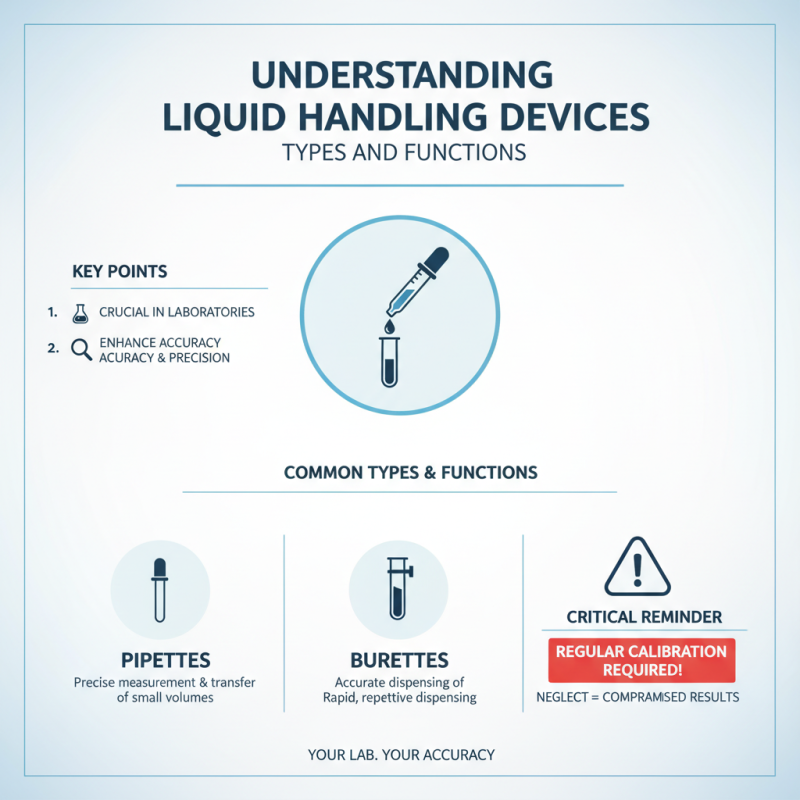
Understanding Liquid Handling Devices: Types and Functions
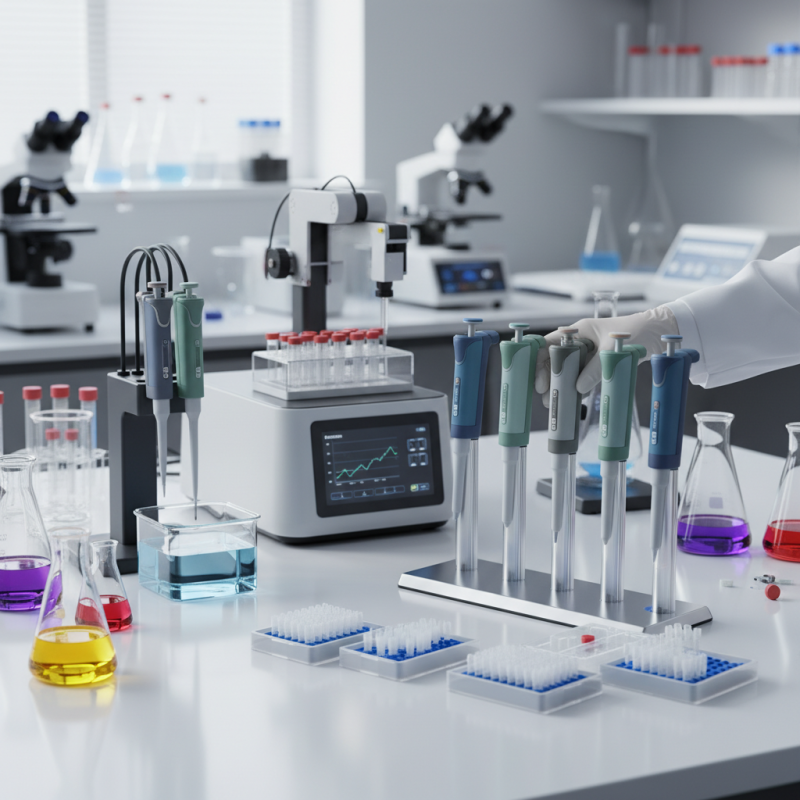
Liquid handling devices are crucial in any laboratory. They come in various types, each serving distinct functions tailored to specific tasks. Pipettes, for instance, allow precise measurement and transfer of small liquid volumes. These instruments can enhance accuracy, but they require regular calibration. If neglected, that can compromise results.
On the other hand, automated liquid handlers increase efficiency. They are designed for high-throughput tasks, capable of handling multiple samples simultaneously. However, they may present a learning curve for new users. Error rates can rise without proper training. Understanding the basics of each device type helps in choosing the right one for your lab's needs.
Burettes offer a different advantage. They are ideal for titrations, providing a controlled release of liquids. It's essential to ensure they are clean and free from blockages. Even simple tasks can lead to inconsistencies if correct procedures are not followed. Each device’s role in a workflow can vary. Reflecting on these details allows for better decision-making in laboratory setups.
Identifying Laboratory Requirements for Liquid Handling Solutions
Identifying laboratory requirements is crucial for selecting the right liquid handling devices. Begin by assessing the volume of liquids your lab typically handles. Are you working with small microvolumes or larger quantities? This consideration will help narrow down your options. Next, think about the precision you need. High precision is essential for experiments that demand accuracy in measurements. Sometimes, labs overlook this aspect, leading to less reliable results.
Consider the types of liquids you will be working with as well. Are they viscous, corrosive, or volatile? The properties of these liquids can influence the compatibility of the device. It's easy to assume that all devices can handle all types of liquids, but this is a common misconception. Evaluate your team's experience with liquid handling as well. Sometimes, improper use of devices leads to errors. Training and familiarity with the equipment may improve efficiency.
Think about the available space in your laboratory as well. Not every device fits well into a crowded workspace. Compact solutions might be necessary when dealing with limited bench space. Reflect on both current and future needs. Will your lab's requirements change over time? This foresight can prevent you from making choices that quickly become outdated. Balancing these factors can be challenging, but it's essential for optimizing your liquid handling processes.
Evaluating Precision and Accuracy in Liquid Handling Devices
Selecting the right liquid handling devices is crucial for laboratory precision. Devices must consistently deliver accurate volumes to minimize errors in experiments. According to a report by Lab Manager, an accuracy rate of at least 95% is essential in analytical chemistry tasks. Devices that fall below this threshold are unreliable, risking the validity of research results.
Precision is equally important. Studies indicate that variability in liquid handling can lead to a 10% deviation in results. This deviation can impact crucial experiments, leading to lost time and resources. Laboratories often overlook the importance of calibrating devices regularly. Failure to do so can compromise both the precision and accuracy of measurements. Calibration is not just a box to check; it's a necessary process to ensure reliability.
Many researchers rely heavily on automatic pipettes, yet they often underestimate human error in manual handling. A misplaced pipette tip or incorrect angle can drastically alter liquid transfer. Laboratory personnel should be aware of this risk. Training in proper techniques can mitigate potential errors. Reflecting on these factors is vital for enhancing overall accuracy and precision in liquid handling.
How to Choose the Right Liquid Handling Devices for Your Laboratory Needs
This chart evaluates the precision and accuracy of various liquid handling devices used in laboratories. The data compares the mean error percentage and the repeatability of three common types of devices: Micropipettes, Automated Liquid Handlers, and Manual Syringes.
Considering Ease of Use and Ergonomics in Device Selection
When selecting liquid handling devices, ease of use and ergonomics are crucial. A device that feels uncomfortable can lead to fatigue. This can ultimately affect your work quality. Consider the weight and grip of the instrument. A lightweight pipette reduces strain during extended use.
Look for devices that fit comfortably in your hand. Check if controls are easy to reach and operate. Ergonomic designs minimize awkward movements. This helps maintain productivity and reduces errors.
Tips: Test different models before committing. Do they feel endurable during repetitive tasks? Pay attention to the device’s balance and functionality. What works for one person may not work for another. Regularly assess your comfort level when using your tools. A small shift in ergonomics can make a big difference in everyday tasks.
How to Choose the Right Liquid Handling Devices for Your Laboratory Needs?
| Device Type |
Ease of Use Rating (1-5) |
Ergonomics Rating (1-5) |
Common Applications |
| Pipette |
4 |
5 |
Transferring small volumes of liquids |
| Multichannel Pipette |
5 |
4 |
High throughput applications, e.g., 96-well plate assays |
| Automated Liquid Handling System |
3 |
3 |
Complex workflows, multi-sample processing |
| Syringe Pump |
4 |
4 |
Precise fluid delivery at controlled rates |
| Reagent Dispenser |
5 |
5 |
Dispensing multiple reagents into assays |
Budgeting and Cost-effectiveness in Liquid Handling Equipment Choices
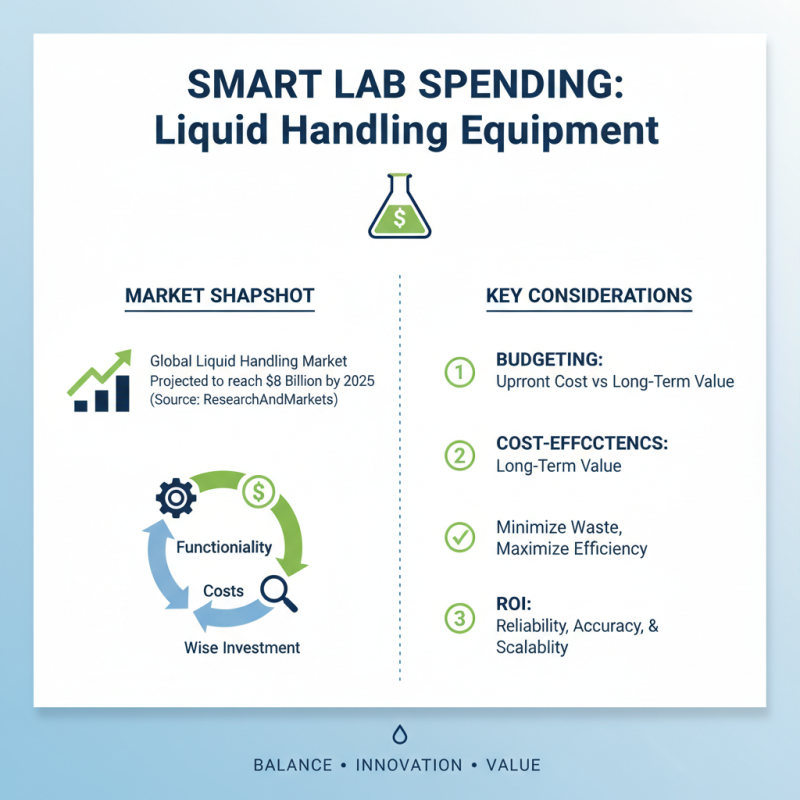
Choosing the right liquid handling devices requires careful consideration of budgeting and cost-effectiveness. According to a recent market analysis by ResearchAndMarkets, the global liquid handling equipment market is projected to reach $8 billion by 2025. This growth highlights the need for laboratories to invest wisely in their equipment while balancing functionality and costs.
Budget constraints often lead to suboptimal choices. For instance, a laboratory may choose less expensive pipettes that compromise accuracy. A 2019 study revealed that improper liquid handling could lead to a 20% error in experimental results. To avoid this, laboratories should assess the total cost of ownership, not just the initial purchase price. Maintenance costs, potential downtime, and the quality of results are critical factors to consider.
Moreover, many laboratories overlook the importance of training staff on liquid handling techniques. Inadequate training can lead to waste and inefficiency. A report by Lab Manager indicated that proper training can reduce liquid handling errors by almost 30%. Therefore, investing in high-quality devices and in staff training is essential for achieving cost-effectiveness in the long run.