How to Choose the Right Laboratory Pipette for Your Needs?
Choosing the right laboratory pipette is crucial for accurate results. In labs, many tasks depend on precise liquid handling. A laboratory pipette can significantly affect your experiments, outcomes, and efficiency.
Different pipettes vary in design and functionality. Some are manual. Others are electronic. It is essential to know the volume requirements and the type of liquid being handled. The wrong choice can lead to errors in sample preparation. Evaluating your needs is vital. Is your work routine or more specialized?
Comfort and ergonomics should not be overlooked. For long hours, a comfortable pipette can reduce fatigue. Look for features that support ease of use. While a high price tag often suggests quality, it's essential to assess if it really meets your demands. A thoughtful approach will help you avoid common pitfalls in selecting a laboratory pipette.
Understanding the Different Types of Laboratory Pipettes Available
When selecting a laboratory pipette, it’s essential to understand the various types available. A volumetric pipette is best for accuracy. It is designed to deliver a precise volume of liquid. These pipettes typically handle larger volumes, making them suitable for titrations and standard solutions. According to a recent market report, volumetric pipettes have a 35% share in the laboratory tools segment.
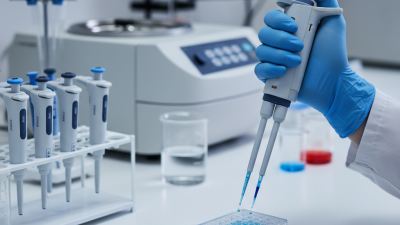
Micropipettes are another common type, often used for handling smaller volumes. These pipettes are versatile and can accurately measure volumes as low as 1 µL. With the rise in molecular biology applications, their demand has increased significantly. Data indicates that micropipette sales have surged by 45% over the past five years. However, issues such as pipetting technique and maintenance can lead to inaccuracies.
Manual pipettes are popular for basic applications, but they come with limitations. They require proper calibration and user training to ensure precise measurements. Conversely, electronic pipettes reduce human error and allow greater ease of use. Despite their benefits, they may not suit all laboratory settings due to cost or complexity. Understanding these differences is vital for making an informed choice.
Laboratory Pipette Types and Their Usage Frequency
Determining the Volume Range Required for Your Experiments
When selecting a laboratory pipette, determining the appropriate volume range for your experiments is crucial. Most laboratory tasks require precise liquid handling with varying volume needs. For instance, common pipette volume ranges include 1-10 µL, 10-100 µL, and 100-1000 µL. According to a report by the American Association for Clinical Chemistry, about 70% of laboratory errors can be traced back to pipette inaccuracies. Therefore, understanding your volume requirements can help minimize such risks.
Consider your specific applications. If you frequently work with small samples, a micropipette with a lower volume capacity is ideal. Conversely, if your work involves larger volumes, select a pipette that accommodates this. Too often, researchers choose a pipette that doesn't align with their specific tasks, leading to frustrations and inefficiencies.
Tips: Always calibrate your pipette before use. Regular maintenance ensures accuracy. Additionally, think about the nature of the liquid. Viscosity or volatility can impact pipetting performance. A better choice can greatly enhance your experiment’s reliability. Don't overlook the importance of ergonomics. Your pipette shouldn't strain your hand during usage.
Evaluating Pipette Accuracy and Precision for Reliable Results
When selecting a laboratory pipette, accuracy and precision should be top priorities. These two factors greatly influence the reliability of experimental results. According to a 2022 study published in the “Journal of Laboratory Techniques,” pipette accuracy can vary significantly across different models. Some pipettes achieve an accuracy rate of 0.5% to 1.0%, while others may range from 1.5% to 3.0%. Such discrepancies highlight the importance of thorough evaluation.
Precision, another critical aspect, is equally important. It refers to the consistency of test results when using the same pipette repeatedly. A report from the American Society for Clinical Laboratory Science (ASCLS) shows that pipettes with a standard deviation of 0.02 to 0.05 mL are deemed reliable for precise measurements. Yet, many laboratories struggle with maintenance. Regular calibration is often overlooked. This can lead to inaccurate results, impacting research or clinical outcomes.
In practical terms, consider performing regular performance checks. Testing with known volumes can help identify issues. A pipette that fails accuracy tests may signal a need for replacement or repair. Be mindful that even slight variations can affect critical experiments. Prioritizing the accuracy and precision of your pipette can dramatically improve the reliability of your laboratory results.
Considering the Comfort and Ergonomics of Pipette Design
When selecting a laboratory pipette, comfort and ergonomics are crucial. A well-designed pipette reduces fatigue during long experiments. Look for features like soft grips and adjustable lengths. These can make a significant difference.
Consider the weight of the pipette. A lightweight pipette is generally easier to handle. However, balance is essential too. A pipette that's too light may feel flimsy. Aim for a pipette that feels sturdy yet easy to maneuver.
Tips: Test different pipettes if possible. Try holding them for a few minutes. Observe how your hand feels afterward. Additionally, check the pipette’s tip attachment. Some designs make it easier than others, which can save you time in the lab. Finally, reflect on how often you use a pipette. If it’s daily, invest in one that prioritizes comfort.
Assessing Maintenance and Calibration Needs for Pipettes
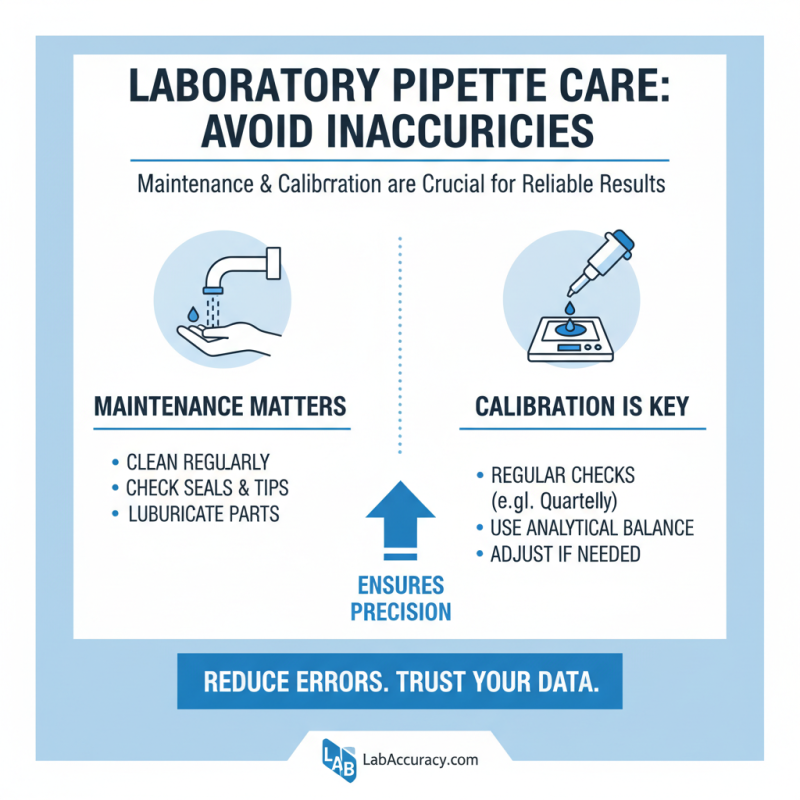
When selecting a laboratory pipette, maintenance and calibration needs often get overlooked. This oversight can lead to inaccuracies. A well-maintained pipette ensures reliable results. Regular calibration checks are essential. They help guarantee that every measurement is precise. Without these checks, small errors can accumulate. This could compromise your entire experiment.
Understanding the frequency of maintenance is crucial. Some labs have strict protocols in place. Others may be less diligent. It's important to assess your lab's specific needs. Daily usage might necessitate more frequent checks. Some pipettes may also have design features that simplify maintenance. Knowing how easy or difficult it is to clean them can save time.
While many scientists focus on functionality, neglecting calibration can be risky. It’s not just about having the right tools. Sometimes, the most reliable pipette is the one you keep in check. A robust maintenance routine creates consistency. It fosters better outcomes for all experiments, despite the initial inconvenience. Investing time in calibration pays off in reliable results. A little reflection on maintenance goes a long way here.