2026 Best Rainin LTS Tips for Global Buyers?
Global laboratories are purchasing more than pipette tips in 2026. They are buying repeatability, traceability, and dependable supply. That is why practical rainin lts tips guidance matters for international buyers comparing price, performance, and compatibility.
Rainin LTS tips use a specific low-force system designed for compatible LTS pipettes. A correct fit should feel secure, not forced. It should also support consistent aspiration across daily workflows. ISO 8655-2:2022 emphasizes calibration and performance requirements for piston-operated volumetric apparatus. Buyers should therefore review pipette calibration records, tip specifications, and documented quality controls together. One box cannot prove accuracy.
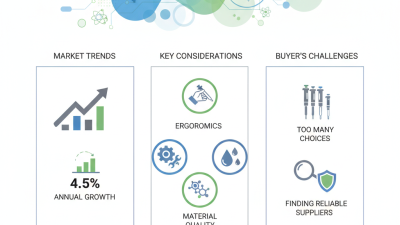
Industry research supports this wider purchasing view. Grand View Research’s laboratory automation reports identify automation, workflow consistency, and reproducibility as major market priorities. MarketsandMarkets also highlights rising demand for automated liquid-handling systems and dependable laboratory consumables. These reports do not select one universal tip. They show why procurement teams increasingly evaluate total operating value instead of unit price alone.
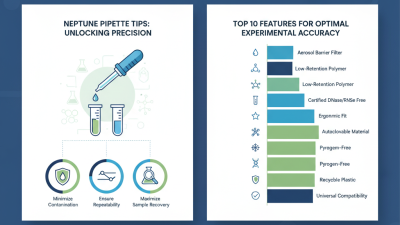
For global purchasing, inspect sterile status, filter options, low-retention claims, packaging integrity, and lot traceability. Confirm whether the tip suits aqueous samples, viscous liquids, or sensitive molecular workflows. A 1,000-tip case may look economical, yet shipping damage or customs delays can interrupt testing. Keep an approved alternative.
Small details matter.
Buyers should request technical datasheets, certificates, and sample evaluations before large orders. Some claims remain difficult to compare across suppliers, especially “low retention” and “universal fit.” That deserves skepticism. The most useful rainin lts tips strategy combines manufacturer documentation, laboratory trial results, ISO-aligned quality checks, and realistic regional supply planning. Mistakes still happen, but a documented decision makes them visible and correctable.
Define Rainin LTS Compatibility: 20–1,000 µL Ranges and Universal Fit Limits
For global buyers, compatibility begins with the tip interface, not the volume printed on the box. A 20–1,000 µL range does not mean one tip fits every pipette. Low-volume tips may cover 20–200 µL, while larger tips commonly serve 100–1,000 µL. Each range needs the correct shaft geometry, seal, and ejector clearance.
A reliable check uses the pipette model, tip format, and intended liquid together. Push the tip on gently. It should seat evenly without excessive force or visible gaps. With a 200 µL setting, test water by weighing repeated dispenses on a calibrated balance. Record variation, leakage, and retention. Small differences matter when handling viscous samples or narrow wells.
Universal fit has limits. “Universal” often describes broad mechanical use, not guaranteed accuracy across all instruments. Some compatible-looking tips may loosen, distort, or increase dispensing force. I have seen buyers trust color coding too much; that shortcut can fail between suppliers. Packaging should state volume range, material, sterility status, and tested instrument families. Lot documentation is valuable for international procurement. It supports traceability and reduces avoidable substitutions. Still, a written specification is not a hands-on test. Before a large order, evaluate several tips from the actual production lot. Even a simple trial can reveal a poor seal, unusual liquid retention, or an uncomfortable fit.
Match Tip Volume to Pipette Capacity Using ISO 8655 Accuracy Principles
Selecting a pipette tip is not only a fit question. It is a volume-control decision. Under ISO 8655 accuracy principles, the pipette should operate within its validated capacity range, not merely reach the target volume.
For example, a 1,000 µL pipette set to 20 µL may deliver less consistently than a 20 µL or 200 µL model. The same tip cannot correct that limitation. Match the tip’s working range with the pipette capacity and the liquid volume. A 200 µL sample usually deserves a pipette designed near that range. Check the manufacturer’s compatibility data, sealing force, and tip geometry before purchasing across regions.
Small details matter. Pre-wet the tip when the liquid is viscous or volatile. Keep the pipette vertical during aspiration. Use consistent immersion depth and dispensing speed. I once treated a loose seal as a calibration problem. It was not. The tip fit was the real issue. That mistake still influences my checks.
ISO 8655-based verification commonly uses gravimetric testing under controlled temperature, humidity, and handling conditions. Buyers should request documented accuracy and precision data, including the tested volume points. Maximum capacity figures can look impressive but may hide weaker performance at low settings. Recheck after shipping, especially when temperature changes are severe. A reliable selection process compares capacity, intended volume, liquid behavior, and local service support. Perfect performance is unrealistic. Careful matching is achievable.
2026 Best Rainin LTS Tips for Global Buyers? - Match Tip Volume to Pipette Capacity Using ISO 8655 Accuracy Principles
| Pipette Capacity |
ISO-Style Verification Points |
Recommended Routine Volume |
Suitable Tip Nominal Capacity |
Volume-Matching Guidance |
Accuracy Priority |
| 0.2–2 µL |
2.0, 1.0 and 0.2 µL |
0.7–2.0 µL |
2–10 µL |
Use the smallest compatible tip that fully covers the selected volume without exceeding pipette capacity. |
Minimize evaporation, dead volume and environmental variation. |
| 1–10 µL |
10, 5 and 1 µL |
3.5–10 µL |
10–20 µL |
Avoid routinely dispensing near the lower limit when a larger-capacity pipette can be used. |
Pre-wet the tip when working near the low-volume range. |
| 2–20 µL |
20, 10 and 2 µL |
7–20 µL |
20–200 µL |
Select a tip whose stated range includes the target volume and whose maximum capacity is not lower than it. |
Control plunger speed and immersion depth. |
| 10–100 µL |
100, 50 and 10 µL |
35–100 µL |
200 µL |
A 200 µL tip is commonly appropriate when the selected volume is within the pipette's operating range. |
Use consistent aspiration and dispensing technique. |
| 20–200 µL |
200, 100 and 20 µL |
70–200 µL |
200–300 µL |
Do not use a tip below its rated capacity for the target volume; do not exceed the pipette setting. |
Maintain a stable vertical aspiration position. |
| 100–1,000 µL |
1,000, 500 and 100 µL |
350–1,000 µL |
1,000–1,250 µL |
Choose a high-volume tip only when its maximum capacity safely covers the selected setting. |
Reduce dripping risk and verify fit before use. |
| 0.5–5 mL |
5, 2.5 and 0.5 mL |
1.75–5.0 mL |
5,000 µL |
Use a tip designed for the full liquid range; avoid stretching a lower-capacity tip beyond its rating. |
Check sealing, leakage and tip rigidity. |
| 1–10 mL |
10, 5 and 1 mL |
3.5–10 mL |
10,000 µL |
For volumes below 1 mL, a smaller pipette generally provides better control than a 10 mL model. |
Use slow, controlled movement and prevent liquid retention. |
ISO 8655 application note: The listed verification points represent the nominal, intermediate and lower-volume checks commonly used when evaluating piston-operated pipettes. Systematic error is assessed from the mean delivered volume, while random error is assessed from repeatability. Actual acceptance limits depend on the applicable ISO 8655 edition, pipette type, volume range and laboratory procedure. Tip compatibility, temperature, liquid properties, calibration status and operator technique must also be controlled.
Verify Sterility, DNase/RNase-Free Claims, and SAL 10⁻⁶ Requirements
2026 Best LTS-Compatible Tips for Global Buyers
For global buyers, sterility claims should be checked, not simply repeated. Ask whether the tips are sterilized by a documented process and packed individually or in protected racks. The target SAL 10⁻⁶ means a one-in-a-million probability of one nonsterile unit after processing. It is not an absolute guarantee. Request the validation summary, production lot, sterilization date, and certificate of analysis. Packaging matters too. A crushed seal can weaken confidence before the tips reach your laboratory.
Tips for purchasing:
Confirm that the certificate matches the exact catalog code and lot number. Check whether DNase and RNase testing covers the finished tips, not only the raw plastic. Review the detection limits and test methods. Ask for endotoxin data when sensitive molecular workflows require it. Keep unopened samples for incoming inspection. Small details matter.
Use low-retention, LTS-compatible tips only when fit and performance are verified with your pipettes. Inspect racks for dust, loose tips, or damaged barriers.
Do not treat “sterile” and “nuclease-free” as interchangeable terms. They describe different risks. A supplier may provide strong documents, yet the wording can remain vague. That is the part worth challenging.
Compare certificates across lots, retain records, and involve quality personnel before approving a recurring shipment. Perfect documentation is rare. Careful questioning is more reliable.
Compare Filtered, Low-Retention, and Conductive Tips for Global Lab Workflows
Choosing the right pipette tip can improve accuracy, reduce contamination, and simplify global laboratory workflows. Start by confirming mechanical compatibility, volume range, and packaging requirements. A tip that fits poorly can cause leaks, uneven aspiration, or visible droplets around the shaft.
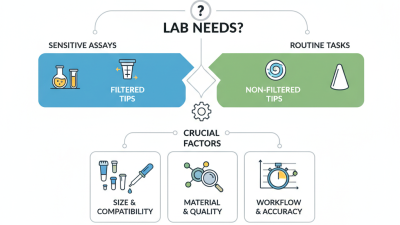
Filtered tips suit molecular workflows where aerosol control matters, especially when samples contain inhibitors or sensitive targets. Low-retention tips help with viscous liquids, proteins, and small-volume reagents. They can leave less liquid behind after dispensing. Conductive tips support automated liquid handlers that monitor liquid levels through electrical signals. This feature is useful for multi-site testing, but only when the instrument and tip system are validated together.
In daily use, I would compare recovery rather than rely on product claims. Dispense colored water into a clean tube and inspect the tip after several cycles. For critical assays, record the liquid type, temperature, aspiration speed, and operator technique. These details often explain unexpected variation. Packaging also deserves attention. Individually wrapped tips may suit contamination-sensitive rooms, while refill systems can reduce storage space and plastic waste. However, refill loading is not always consistent across laboratories. That weakness needs checking. Global buyers should request lot information, dimensional specifications, and sample packs before placing large orders. A cheaper tip is not efficient if it causes repeated calibration or rejected runs.
Check 2026 Import Rules, ISO 13485 Supply Chains, and Lot Traceability
For global buyers, the best 2026 pipette-tip strategy starts with import accuracy. The World Customs Organization’s Harmonized System 2022 contains 5,612 four-digit subheadings, so classification should never rely on a supplier’s invoice alone. Confirm the correct tariff code, country of origin, customs value, importer-of-record details, and 2026 duty changes before shipment. Request commercial invoices, packing lists, certificates of conformity, and material declarations. A customs broker can review uncertain classifications. Small errors can delay a temperature-sensitive laboratory delivery.
Supplier quality matters just as much. The ISO Survey 2022 recorded 38,654 ISO 13485 certificates worldwide, showing how widely medical-device quality systems are used. Buyers should check the certificate scope, issuing body, expiration date, and site address. ISO 13485:2016 emphasizes controlled purchasing and supplier evaluation, not merely a certificate logo. Ask for incoming inspection records, dimensional tolerances, resin specifications, and change-notification procedures. Reality is messier. A valid certificate does not guarantee every shipment is consistent.
Lot traceability should follow each carton from production to receiving. Record the lot number, manufacturing date, quantity, supplier site, purchase order, and inspection result. Keep photographs of labels and packaging when accepting goods. For sterile or treated tips, verify the process record and expiry information. The WCO’s 2022 framework helps customs classification, but it does not replace local regulatory checks. Reconfirm destination-country requirements before every major order, especially when packaging, intended use, or supplier location changes.